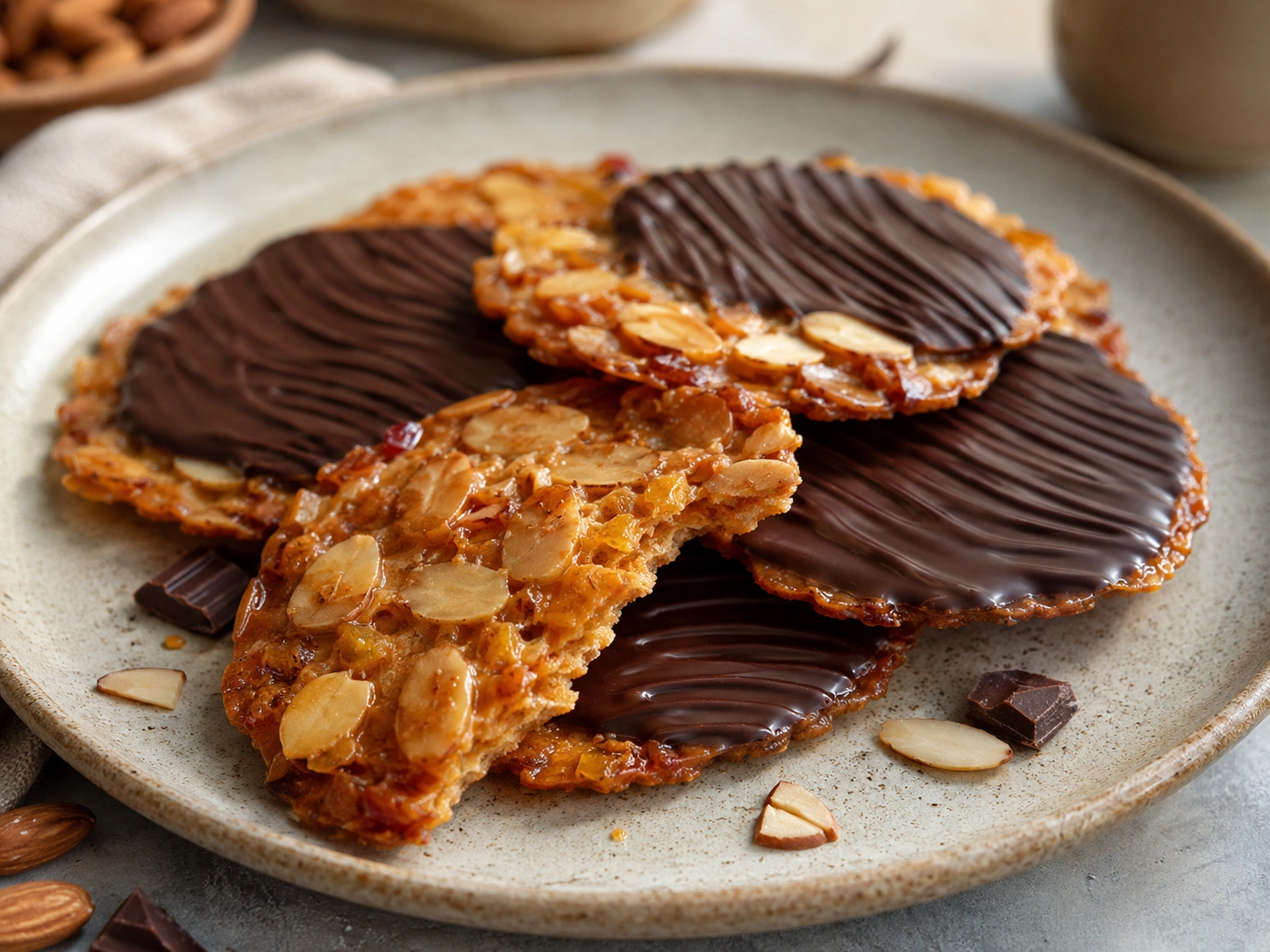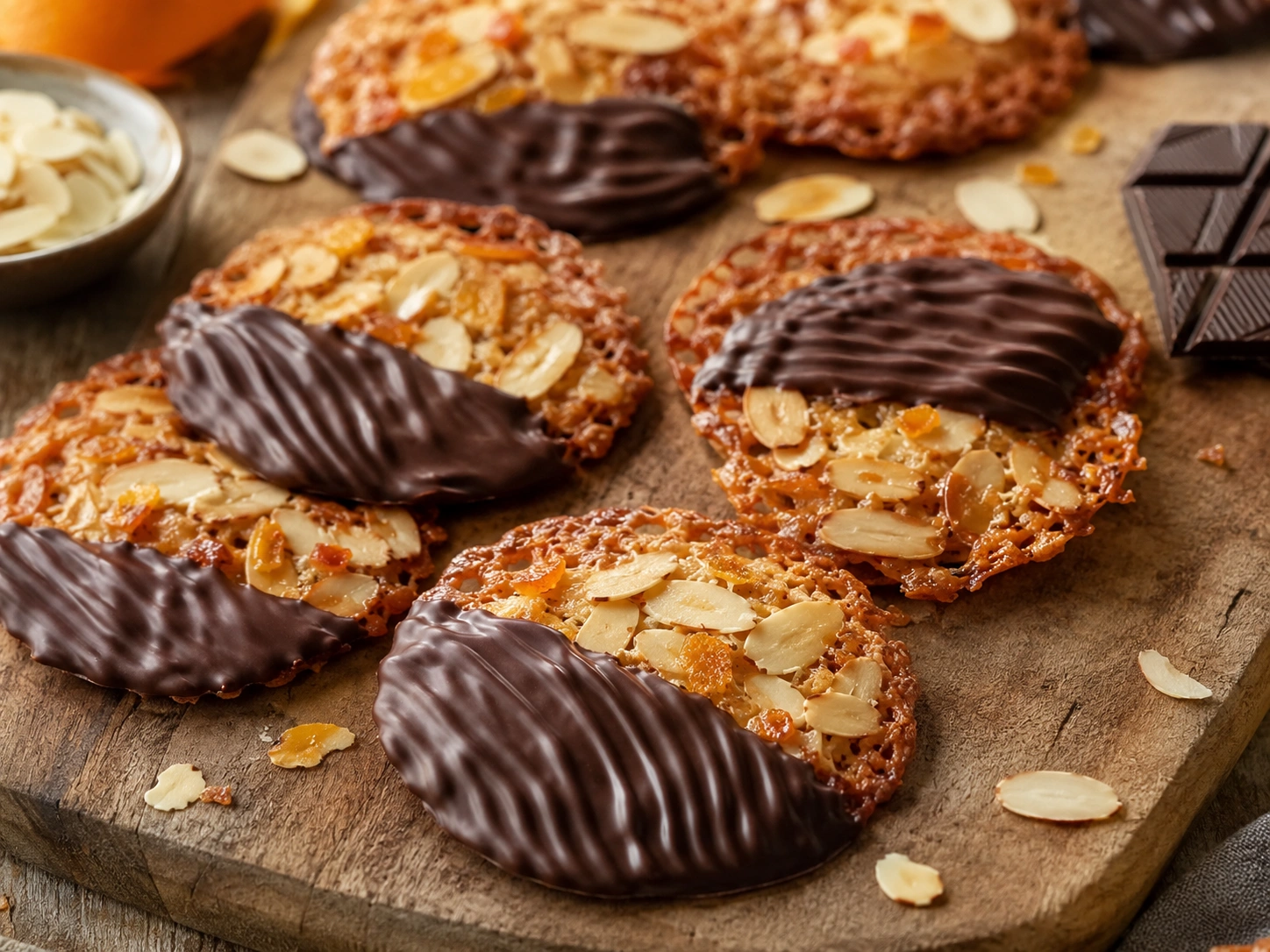
Florentines look like they belong in a patisserie window, not a home kitchen. That thin, amber, lace-like disc studded with almonds and candied fruit, half-dipped in dark chocolate, has a reputation for being fussy and easy to ruin. It isn't, once you understand what's actually happening in the pan.
A Florentine is essentially caramelized sugar and butter holding a scattering of nuts and fruit together in the thinnest possible layer. There's no flour to speak of, no leavening, and no room for imprecision with the caramel stage. That's the whole challenge, and it's also why they taste so good: every bite is concentrated butter, caramel, and toasted almond, with bitter chocolate cutting through the sweetness.
This guide covers the real recipe, why each step matters, the mistakes that ruin a batch, storage, and the variations worth trying once you've got the base technique down.
Equipment
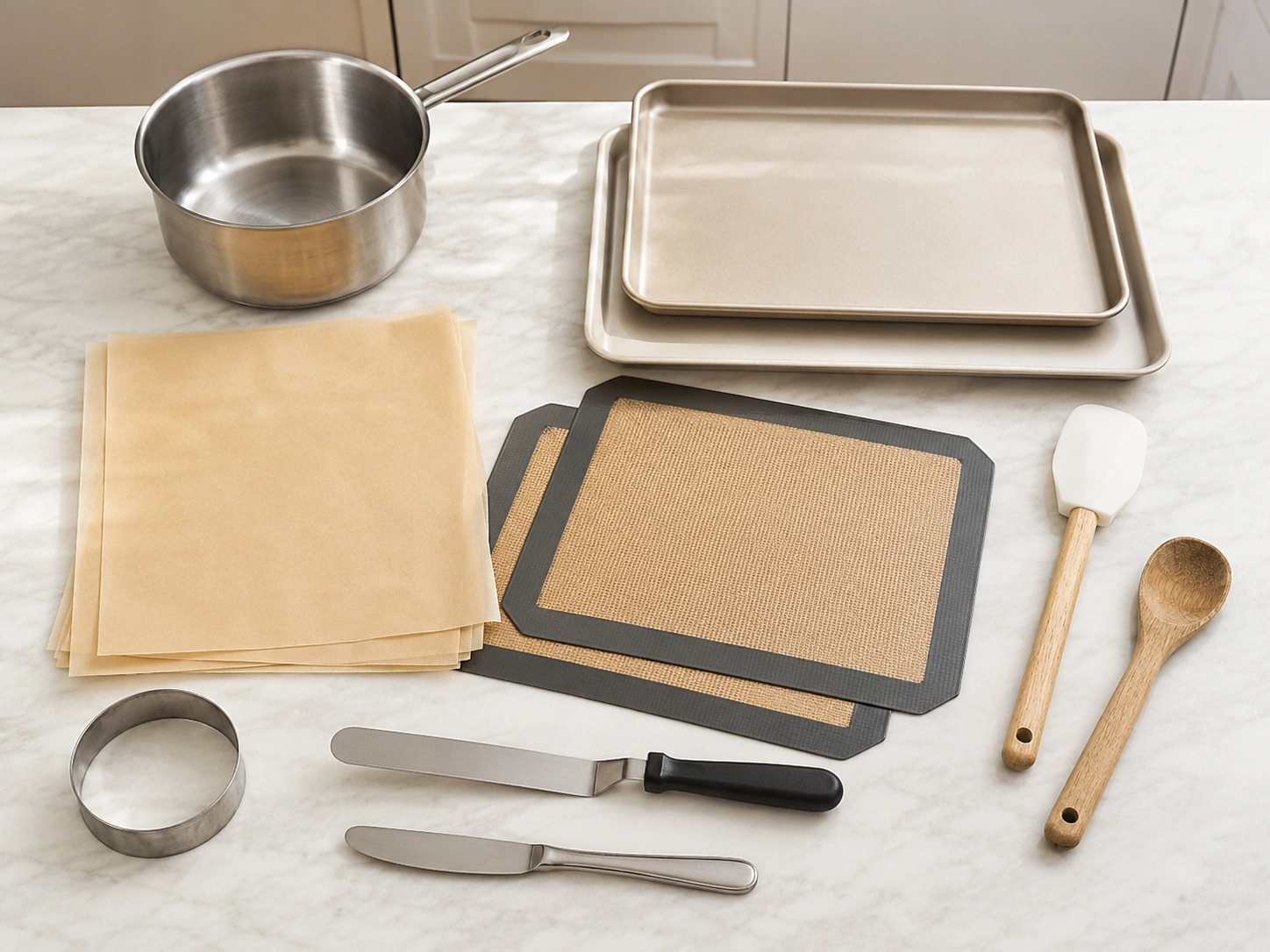
- Medium saucepan
- Two baking sheets
- Parchment paper or, preferably, silicone baking mats
- Heatproof spatula or wooden spoon
- A round cookie cutter slightly larger than the baked cookies (optional, for neatening edges)
- Offset spatula or butter knife, for spreading the chocolate
Ingredients
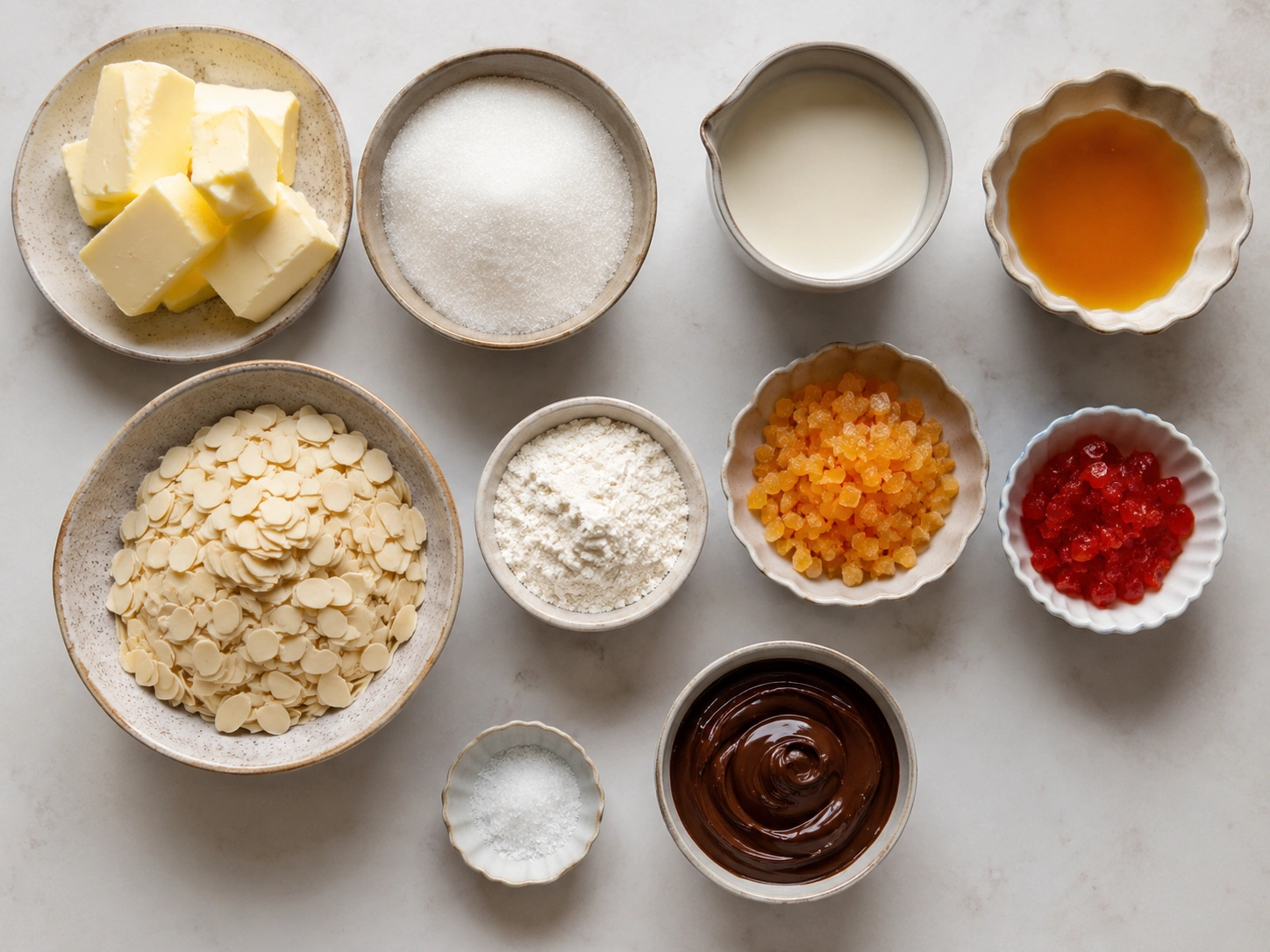
- 1/2 cup (115g) unsalted butter
- 1/2 cup (100g) granulated sugar
- 3 tablespoons heavy cream
- 2 tablespoons honey
- 1 1/2 cups (140g) sliced almonds
- 2 tablespoons all-purpose flour
- 1/4 cup finely chopped candied orange peel or glacé cherries (optional)
- Pinch of salt
- 7 oz (200g) dark chocolate, melted, for coating
Step by Step Guide
Follow this clear visual guide for flawless Florentines every time. Every step is clearly highlighted with process photos.
Preheat Oven & Prep Baking Sheets
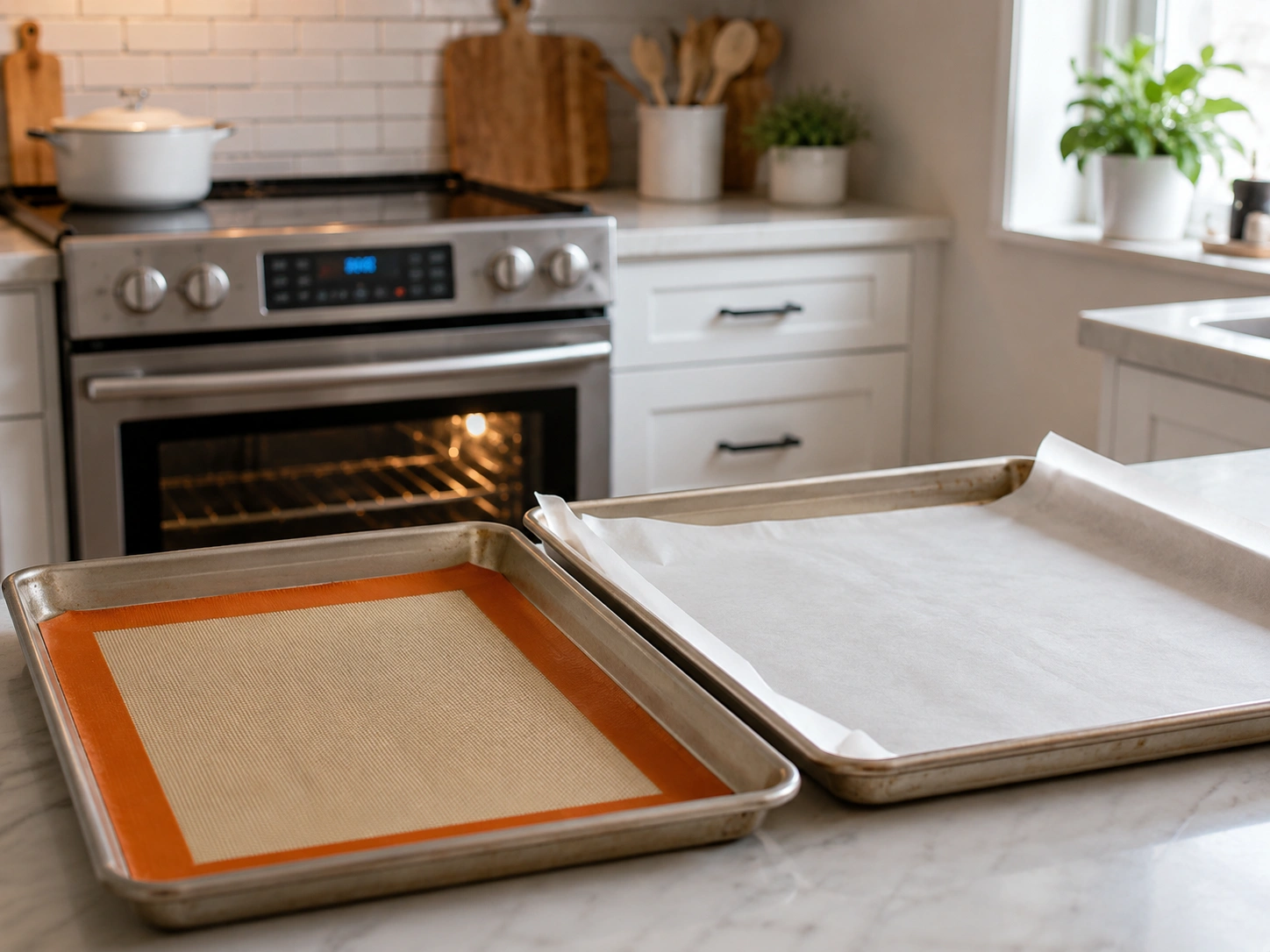
Preheat your oven to 350°F (175°C) and line two baking sheets with parchment paper or silicone baking mats — parchment alone can stick once the caramel spreads, so a silicone mat is worth using if you have one.
Melt the Base
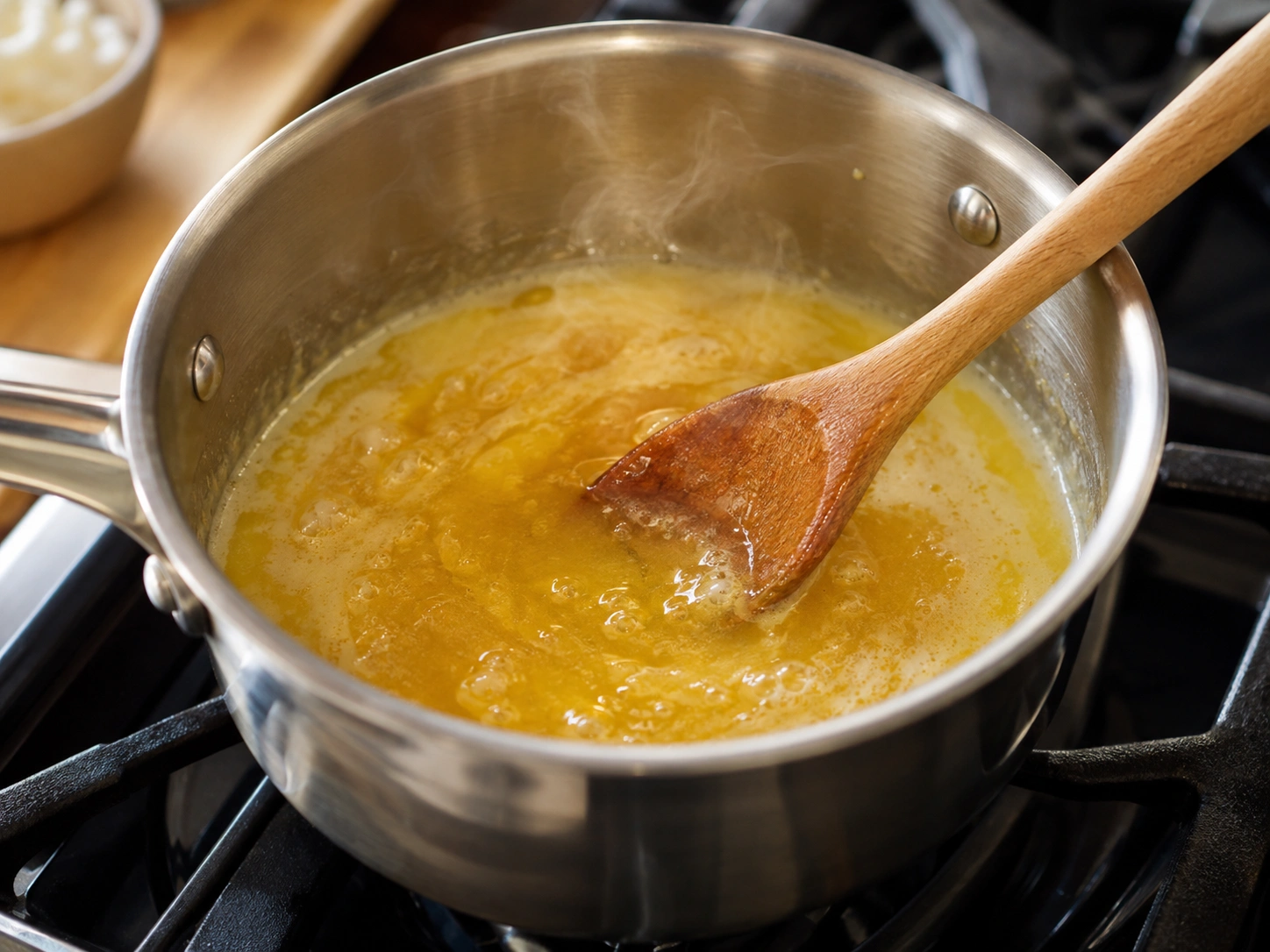
In a medium saucepan over medium heat, combine the butter, sugar, cream, and honey. Stir constantly until the butter has fully melted and the mixture comes to a gentle boil.
Cook the Caramel Briefly
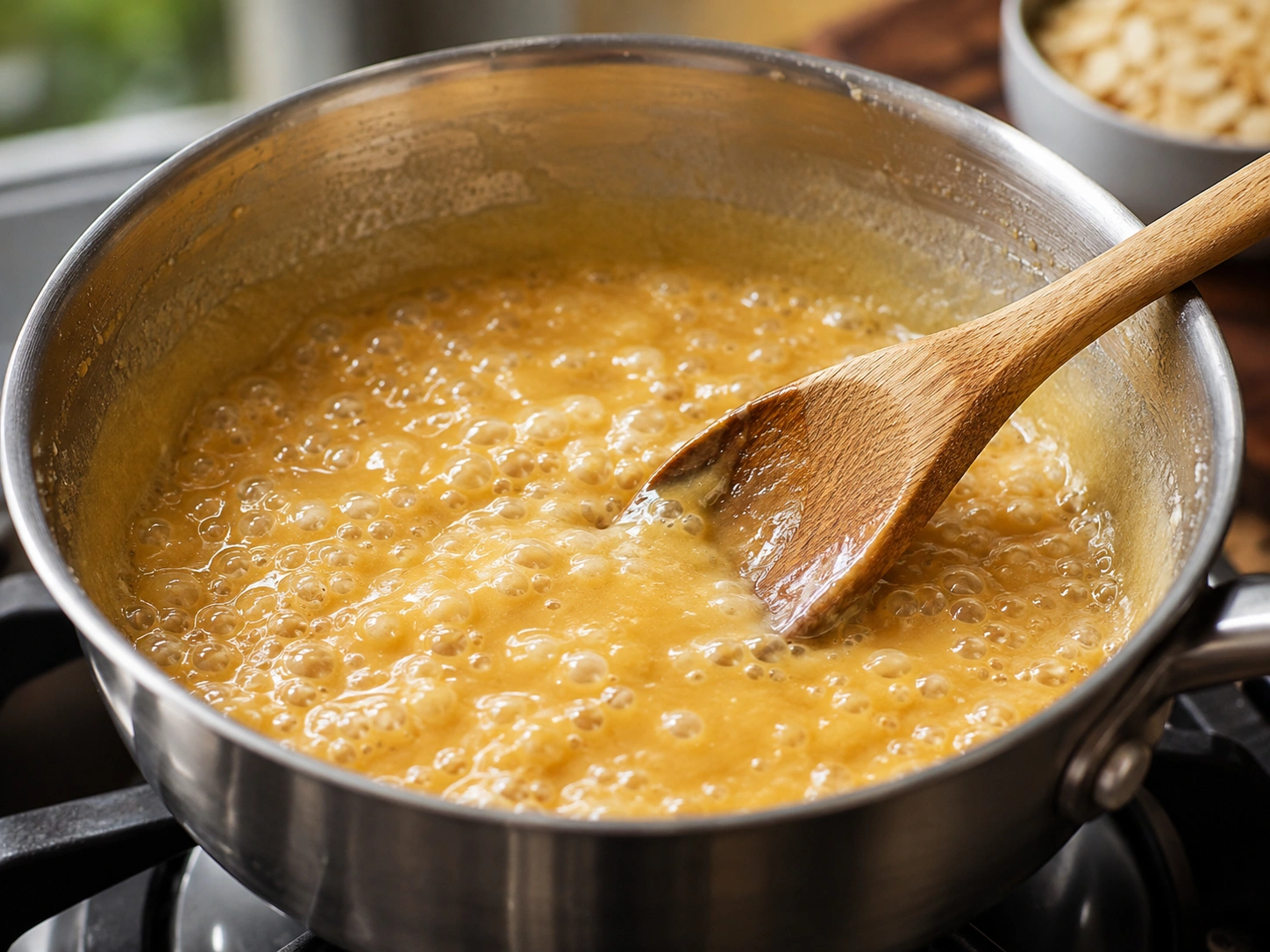
Let the mixture boil for about 1 minute, stirring constantly, until it thickens slightly and turns a pale golden color. This short cook is what gives the finished cookie its structure — skip it, and the cookies spread too thin and burn before they set.
Add the Almonds and Flour
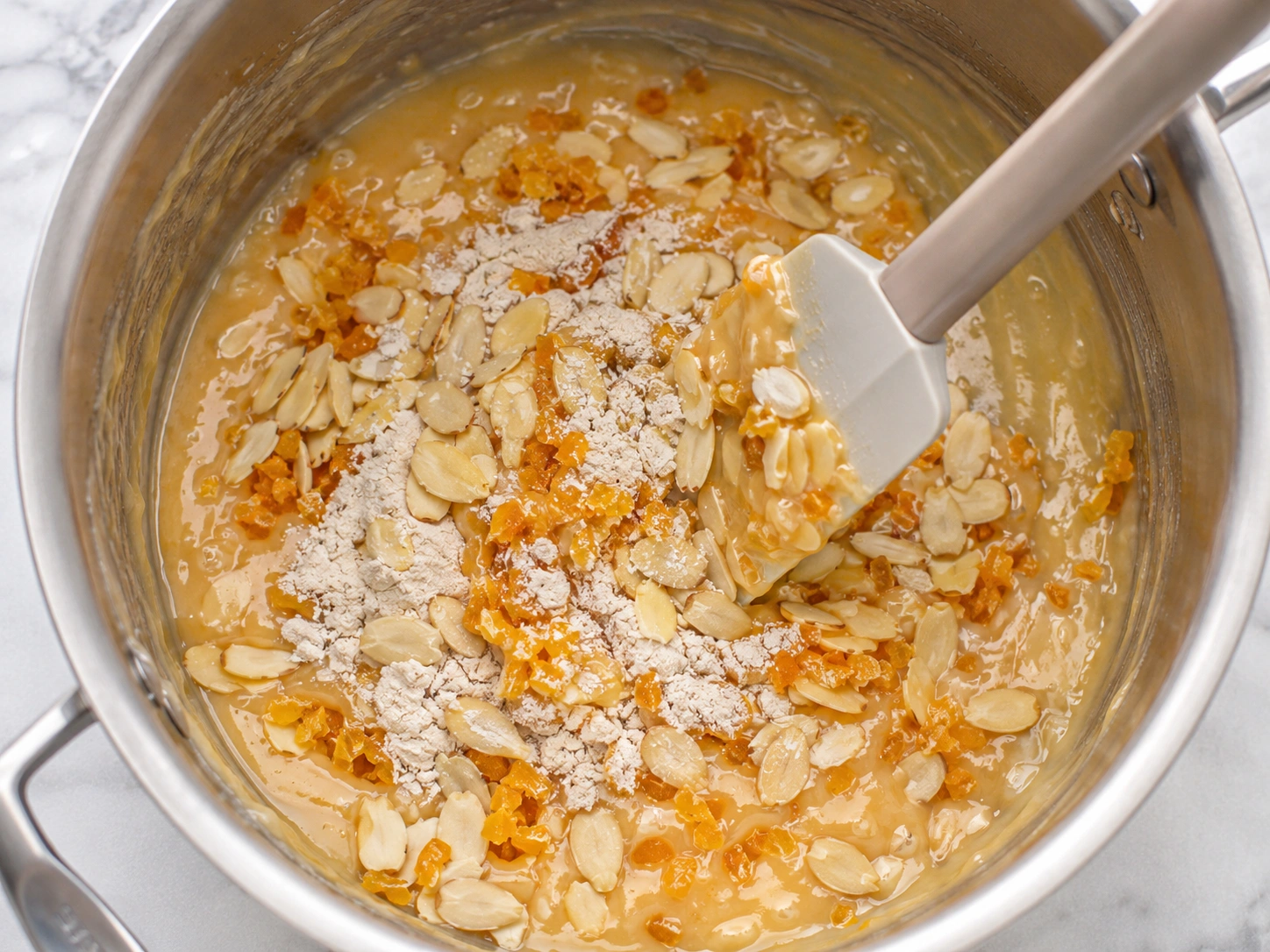
Remove the pan from heat and stir in the sliced almonds, flour, candied fruit if using, and a pinch of salt. Mix until every almond slice is coated.
Portion the Batter
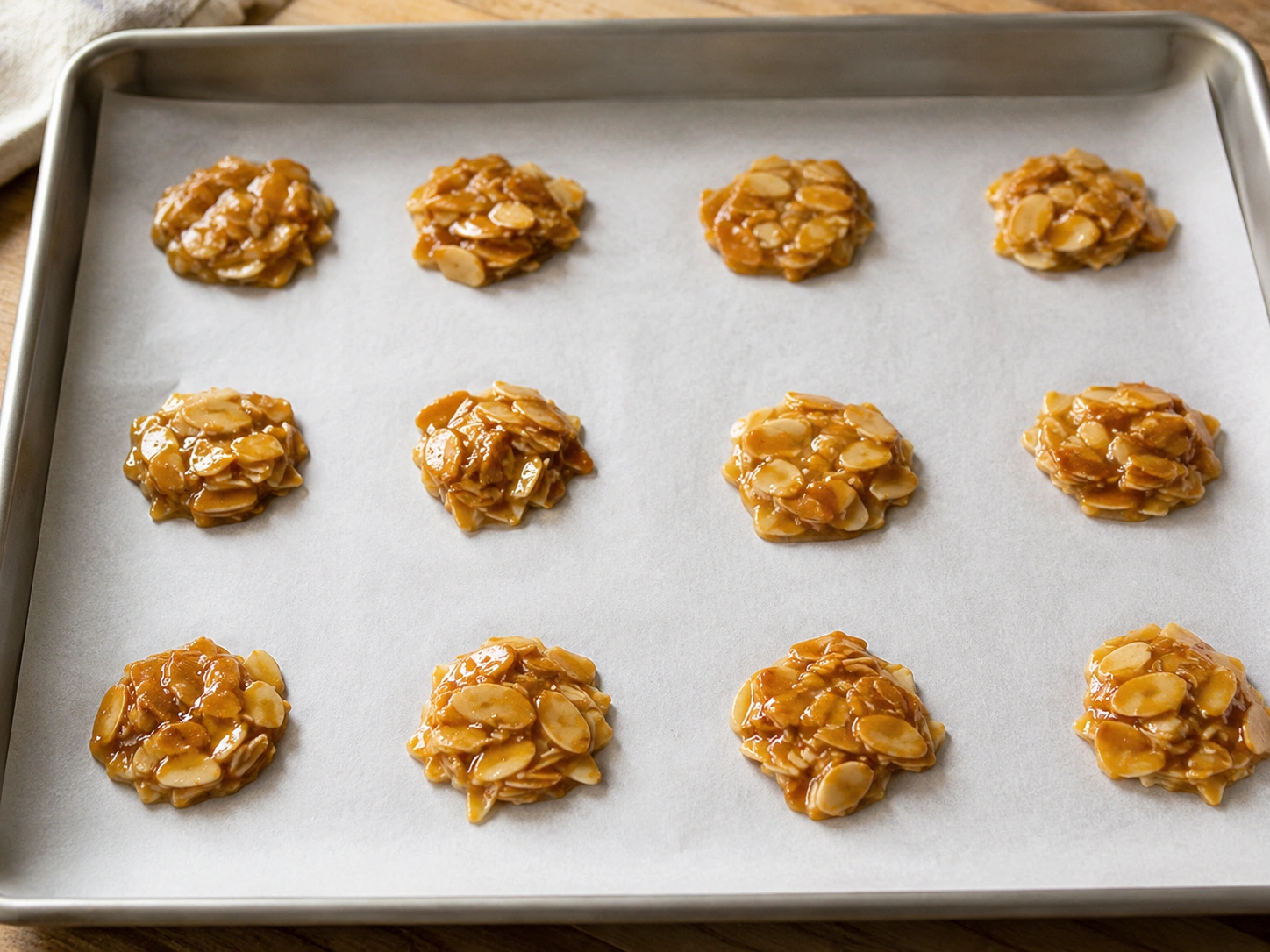
Drop level tablespoons of the mixture onto the prepared baking sheets, spacing them at least 3 inches apart — they spread significantly, and cookies placed too close will merge into one sheet of caramel.
Flatten Slightly
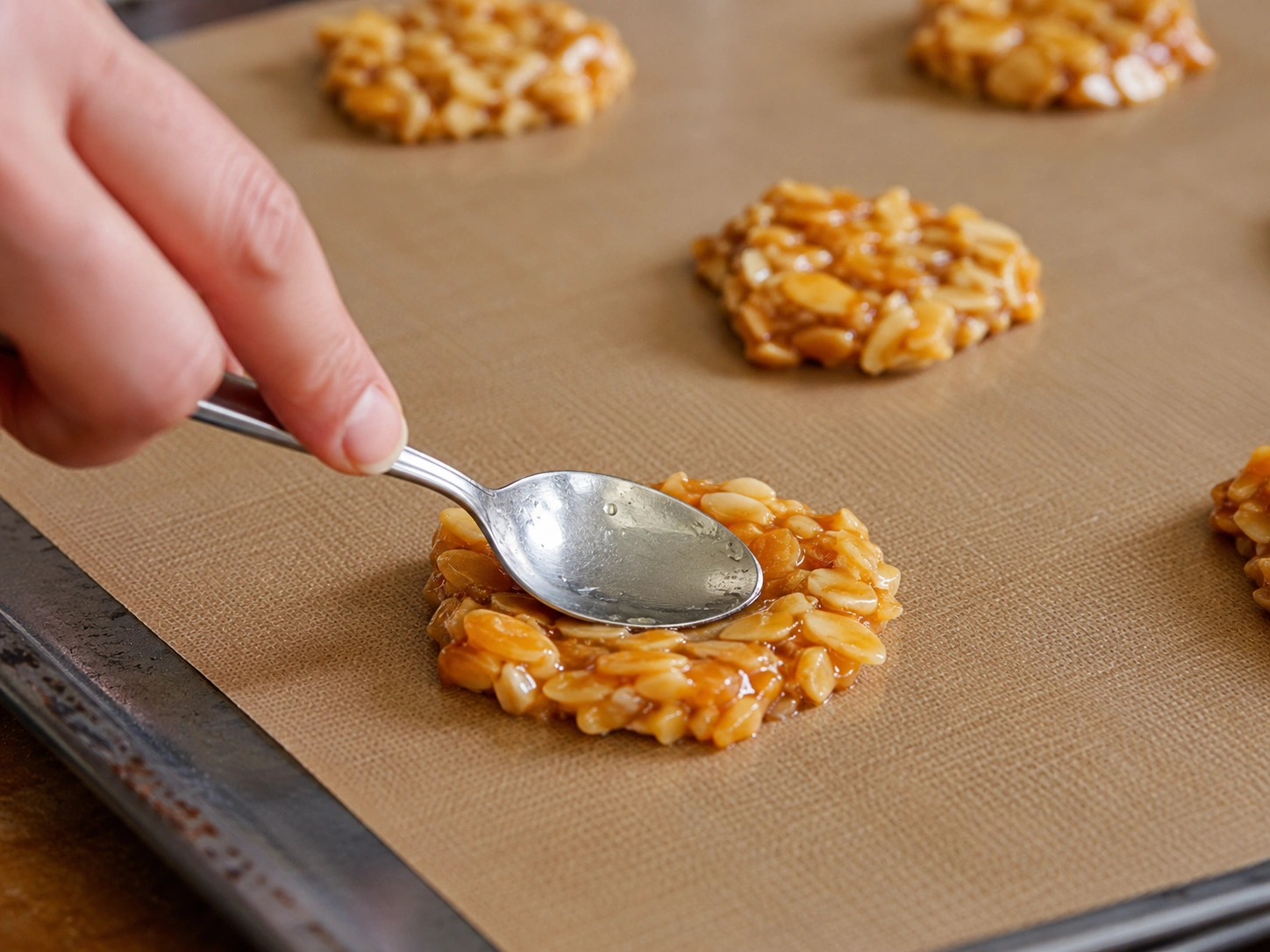
Use the back of a wet spoon to gently flatten each mound into a rough disc, about 2 inches across. They'll spread further in the oven, so they don't need to be perfectly even.
Bake Until Deeply Golden
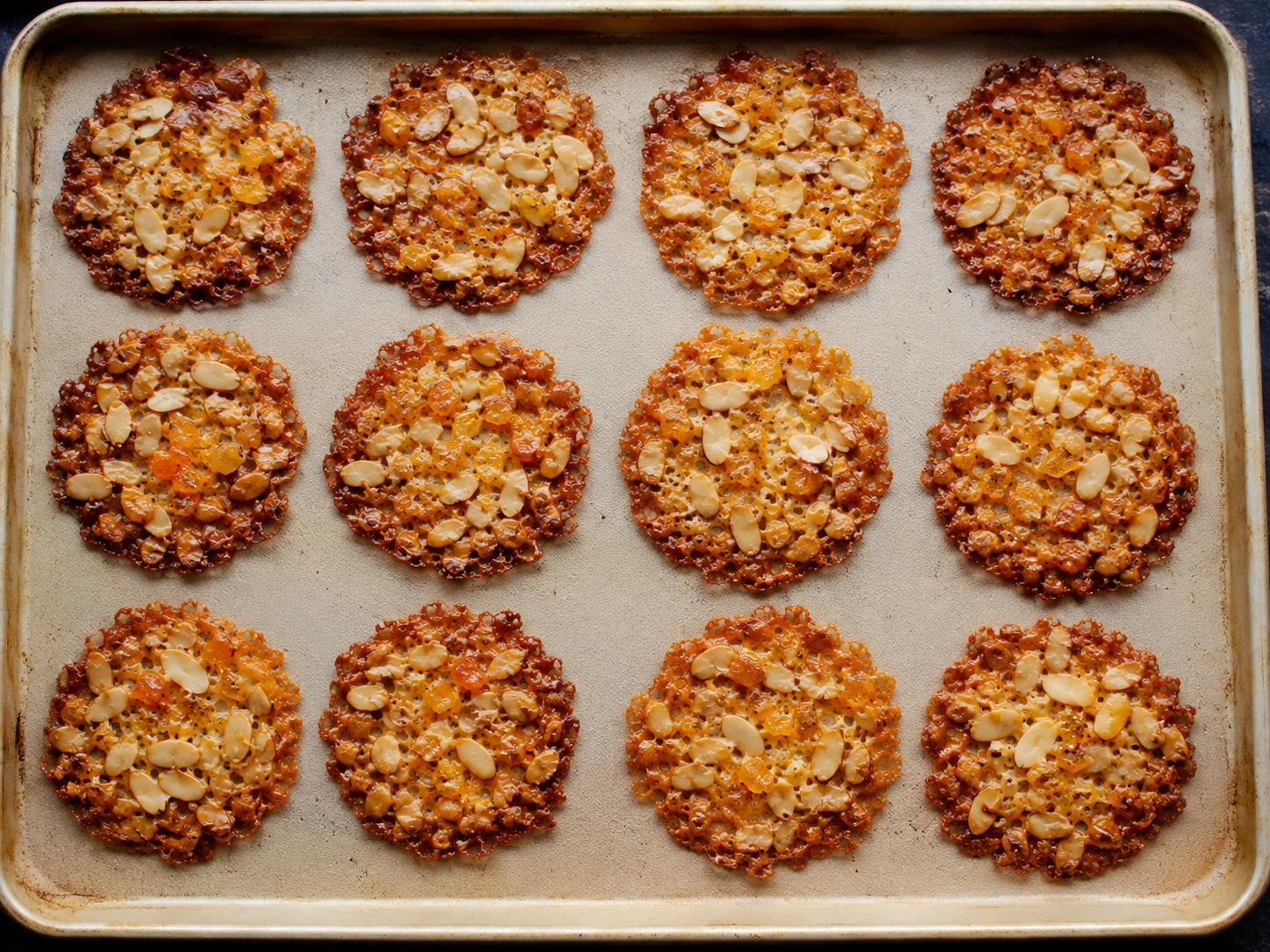
Bake for 10–12 minutes, until deeply golden brown across the whole surface, not just at the edges. A pale, blond Florentine will taste of raw butter rather than caramel — the color is the flavor here.
Cool Completely on the Tray
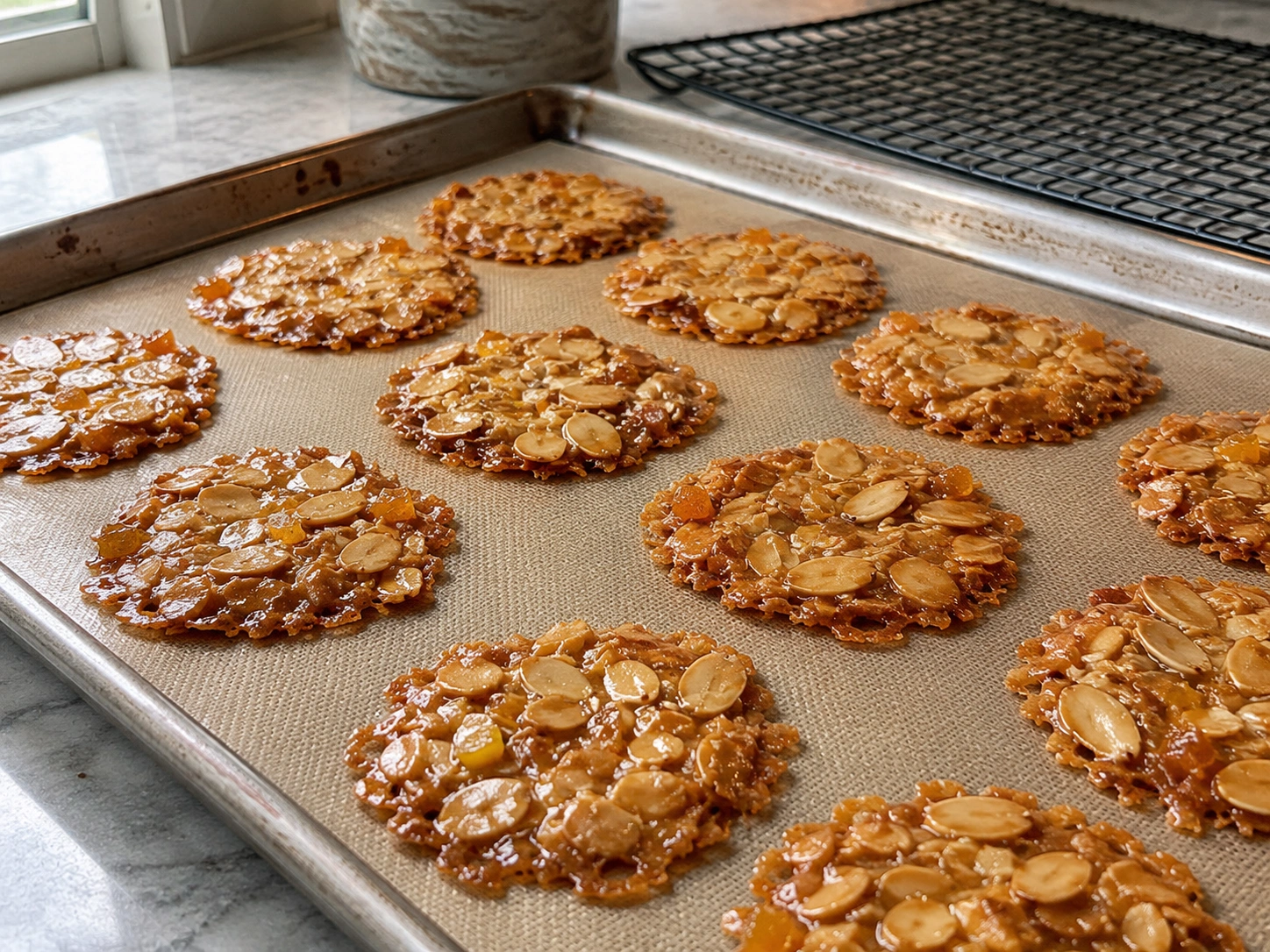
Florentines are extremely fragile straight out of the oven and will tear or fall apart if moved too soon. Let them firm up on the baking sheet for at least 10 minutes before transferring to a wire rack.
Coat with Chocolate
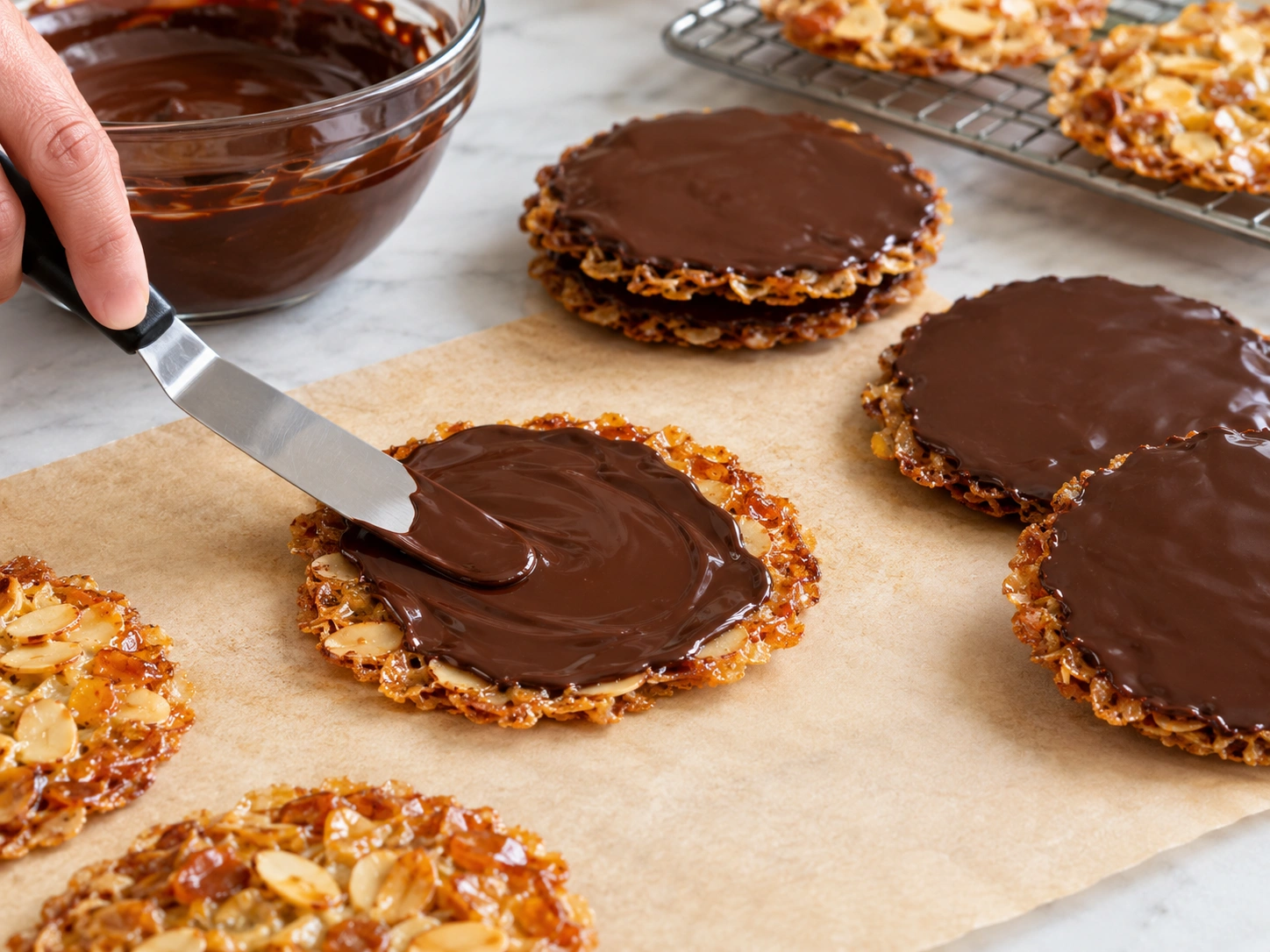
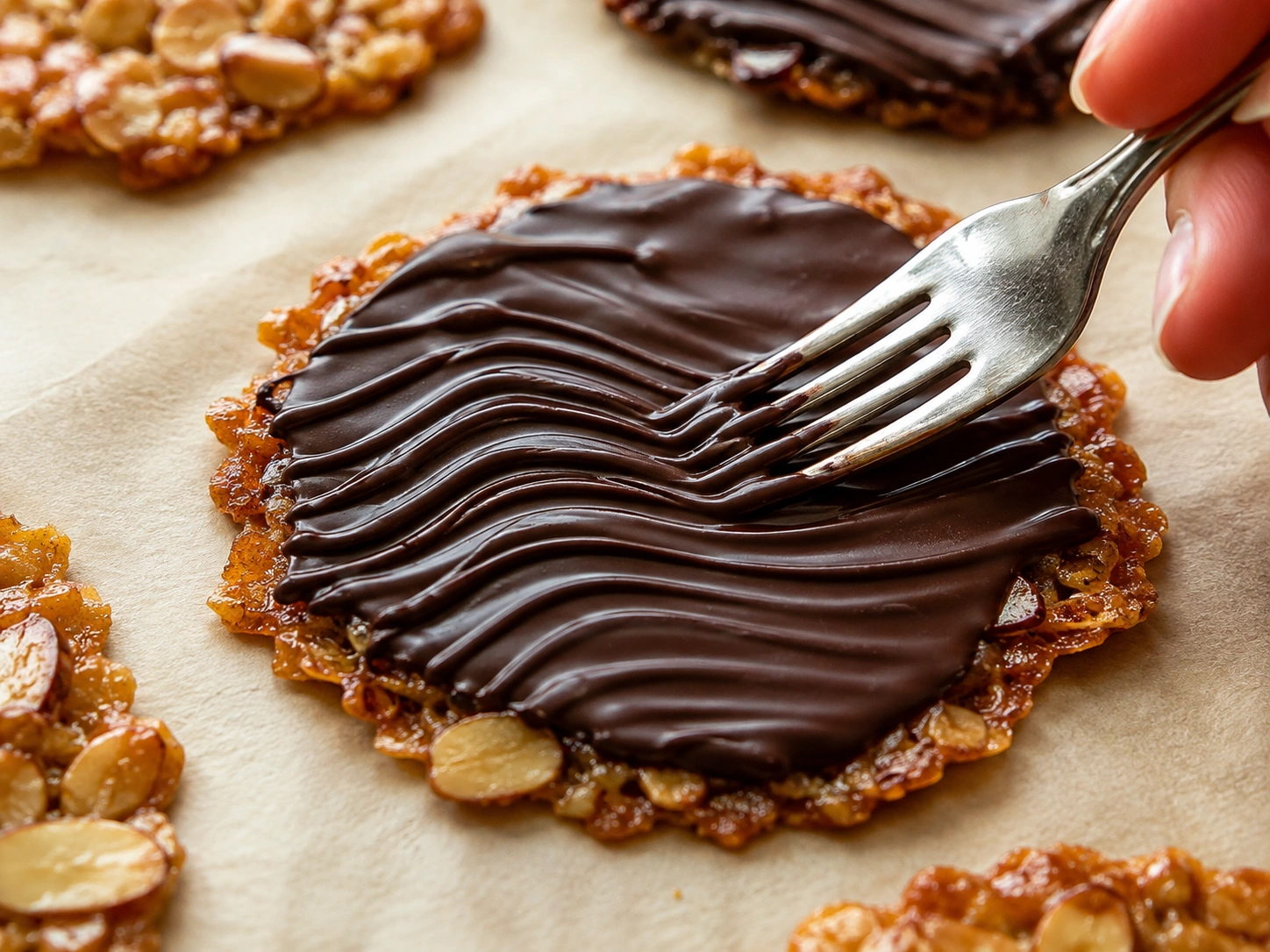
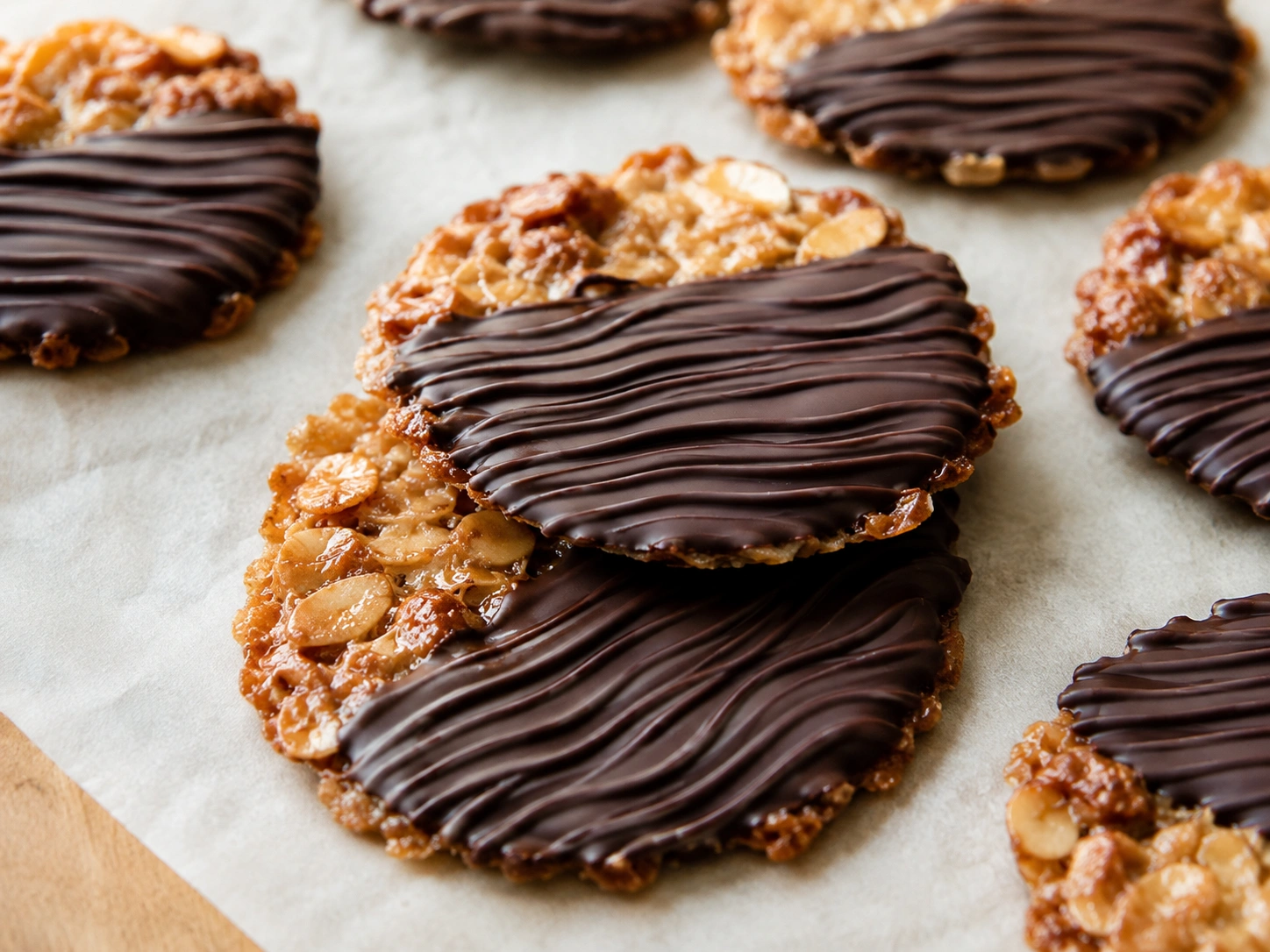
Once fully cooled, spread a thin layer of melted chocolate over the flat (underside) of each cookie. For a classic look, drag a fork through the chocolate in wavy lines before it sets.
Let the Chocolate Set
Let the chocolate set at room temperature, or in the fridge for 10–15 minutes if you're short on time, before storing.
Watch the Step-by-Step Video Guide
See the exact caramel color, batter spreading, and chocolate wave technique in motion.
What Is a Florentine, Exactly?
A Florentine is a thin, crisp cookie made from a caramelized mixture of sugar, butter, cream, and honey, combined with sliced almonds and often candied orange peel or glacé cherries, baked until deeply golden and lacy, then typically finished with a layer of dark or milk chocolate on the flat underside.
Despite the name, Florentines aren't a traditional Florentine or even broadly Italian pastry in origin — the name is generally believed to have been attached to the cookie in France or Austria, and it's now used across European baking traditions with only loose consistency. You'll find versions in French, Austrian, German, and Italian bakeries, all slightly different, all recognizably Florentine.
What defines the category isn't a strict recipe but a technique: a cooked caramel base that spreads and thins in the oven, sets into a brittle lace once cooled, and gets a chocolate layer on one side.
Techniques to Stop Florentines From Spreading Too Much
Wide spacing helps, but if you want tighter control over the final shape, a few techniques go further than spacing alone.
- Bake them in a silicone muffin pan or round moulds. Portioning the mixture into the shallow wells of a silicone muffin pan or small round moulds physically contains the spread. The cookies come out slightly thicker and more uniform than free-baked ones, which is useful if you want a consistent size for gifting or a plated dessert.
- Scoot them back together right out of the oven. While the cookies are still warm and pliable, in the first minute or two after baking, gently nudge the edges inward with the back of a spoon or a round cookie cutter slightly larger than the cookie. They firm up fast, so this only works in a narrow window — have your cutter or spoon ready before the tray comes out.
- Bake one giant sheet and break it up after. Instead of portioning individual mounds, spread the whole batch of mixture thinly across a lined baking sheet and bake it as one piece. Once cooled and set, break or cut it into irregular shards — this sidesteps the spreading problem entirely and gives a rustic, brittle-toffee look rather than uniform rounds.
Decorating Florentines
The classic look is a thin layer of chocolate on the flat underside, combed with a fork into wavy lines, but there's room to vary the finish:
- Half-dip instead of spread. Dip just the edge of each cookie into melted chocolate rather than coating the whole underside, for a lighter, more elegant finish.
- Marbled chocolate. Melt dark and white (or dark and milk) chocolate separately, spread the dark chocolate first, then drizzle the second chocolate over it and swirl gently with a skewer before it sets.
- Drizzle instead of coat. Skip the flat layer entirely and drizzle melted chocolate back and forth across the top side of the cookie for a lighter, less messy option that still reads as a Florentine.
Common Mistakes and How to Avoid Them
Why did my Florentines turn into one giant sheet?
They were placed too close together. Florentines spread significantly as the caramel loosens in the oven heat, so 3 inches of space between mounds is the minimum, and slightly more is safer on your first attempt.
Why are my Florentines greasy or oily?
This usually means the caramel base wasn't cooked long enough before the almonds went in, so the butter never fully emulsified with the sugar and cream. Give the mixture the full minute of boiling time in step three.
Why did my Florentines burn on the edges before the center set?
Thin, lacy cookies cook unevenly if the oven runs hot or the baking sheet is dark and heat-conductive. Check them a minute or two early the first time you make a batch, and use a light-colored baking sheet if you have one.
Why are my cookies chewy instead of crisp?
Underbaking is the most common cause — a Florentine needs deep, even golden color across the entire surface to fully caramelize and crisp as it cools. Humidity can also soften finished cookies over time, so store them in a truly airtight container.
Why won't the chocolate stick to the cookie?
Grease or moisture on the underside of the cookie prevents chocolate from adhering. Make sure the cookies are fully cooled and the surface is dry before spreading the chocolate layer.
How do I stop the cookies from sticking to the tray?
Parchment paper works for most ovens, but a silicone baking mat is more reliable for Florentines specifically, since the sugar content is high enough to fuse to parchment in some ovens. Never grease the tray directly — the butter already in the recipe is enough fat.
Variations Worth Trying
Orange and Pistachio Florentines
Swap half the sliced almonds for chopped pistachios and add the zest of one orange to the caramel base along with the candied orange peel. The color contrast and citrus edge make these a good option for a more distinctive presentation.
Florentine Lace Cookies (No Chocolate)
Skip the chocolate coating entirely and serve the cookies plain, or use them to sandwich a thin layer of ganache between two cookies instead of coating just one side. This works well if you want something less sweet or are serving alongside a rich dessert.
Milk Chocolate Florentines
Dark chocolate is traditional, but milk chocolate is a legitimate substitution if you're serving a crowd that prefers a sweeter finish. Because milk chocolate is softer at room temperature, refrigerate these fully before serving so the coating stays firm.
Gluten-Free Florentines
The flour in this recipe is a small stabilizing amount, not a structural one, so a 1:1 gluten-free flour blend or even cornstarch in the same quantity works as a direct substitute without noticeably changing the texture.
Storage and Make-Ahead Tips
Storing finished cookies: Store completely cooled, chocolate-set Florentines in an airtight container at room temperature for up to a week. Layer them with parchment paper between layers so the chocolate coating doesn't stick to the cookie above it.
Storing in warm or humid weather: Florentines are more sensitive to humidity than most cookies because of their high sugar content. In warm climates or humid months, storing them in the fridge in an airtight container helps maintain crispness, though they should come to room temperature before serving for the best texture.
Freezing: Baked, un-chocolate-coated Florentines freeze well for up to two months in an airtight container, separated by parchment. Thaw at room temperature, then add the chocolate coating fresh — chocolate that's frozen and thawed on the cookie can develop a dull, streaky finish.
Making the batter ahead: The caramel-almond mixture doesn't hold well once cooked and is best portioned and baked immediately after step four. This isn't a dough you can refrigerate and bake later.
Frequently Asked Questions
What is a Florentine cookie made of?
A Florentine is made from a cooked caramel base of butter, sugar, cream, and honey, combined with sliced almonds and often candied fruit, then typically coated on one side with chocolate once baked and cooled.
Why are my Florentines not crispy?
Undercooking is the most common cause. The caramel base needs to reach a deep golden color both in the pan and in the oven to fully set into a crisp, brittle texture as it cools.
Can I make Florentines without candied fruit?
Yes. Candied orange peel and glacé cherries are traditional but optional — the almonds and caramel base are what define the cookie, and it works well without any fruit at all.
Why do Florentines spread so much in the oven?
The high butter and sugar content melts and loosens significantly under oven heat before the mixture caramelizes and sets, which is why spacing them well apart on the tray matters more than with a typical cookie dough.
Can I use almond flour instead of sliced almonds?
No, not as a direct substitute. Sliced almonds provide the structure and lace-like appearance that defines a Florentine; almond flour would create a completely different, cake-like texture.
How long do Florentines last?
Stored airtight at room temperature, they keep well for about a week. In humid conditions, refrigeration extends that further, though they're best enjoyed within the first few days for peak crispness.
Can I make Florentines vegan?
Yes, with substitutions: a plant-based butter, a plant-based cream alternative, and a vegan chocolate for coating. The texture will be slightly different since dairy butter caramelizes differently than most alternatives, but the technique remains the same.
Why did my chocolate coating turn white or streaky?
This is called chocolate bloom, and it happens when chocolate isn't tempered properly or is exposed to temperature swings, such as being refrigerated and then left at room temperature repeatedly. It's still safe to eat, just less visually smooth.
Final Thoughts
Florentines reward precision more than most cookies, but the technique itself is simple once you've made a batch and seen how the caramel behaves. The color of the caramel, the spacing on the tray, and full cooling before handling are the three things that actually determine whether a batch turns out crisp and lacy or greasy and misshapen.
Once the base technique feels familiar, it's an easy recipe to adapt — different nuts, different citrus, different chocolate — without touching the part that actually needs care: the cook time on that caramel.