There's a particular kind of satisfaction that comes from watching a pot of pale green limes slowly turn into glossy, amber-gold jars of marmalade. It's tangier and more bracing than orange marmalade, with a bitterness that plays beautifully against hot buttered toast, a wedge of sharp cheddar, or a spoonful stirred into a gin cocktail.
If you've never made marmalade before, lime is actually a forgiving place to start, since limes are naturally high in pectin and their thin skins mean less prep than you'd expect from citrus preserving.
This guide walks through a straightforward small-batch lime marmalade recipe, the science behind why it sets (or doesn't), and the troubleshooting tips that make the difference between a jar of syrup and a proper marmalade.
What You'll Need
Marmalade making doesn't require fancy equipment, but a few basics make life easier:
- A large, heavy-based pot: Wider than it is deep helps the mixture reduce faster.
- A sharp knife and a muslin cloth or clean tea towel: For the pips and pith.
- A sugar thermometer: Helpful but not essential.
- A few small saucers kept in the freezer: For testing the set.
- Sterilised jars with lids: 4 to 5 small jars (200–250ml).
Ingredients (Makes about 4–5 small jars)
-
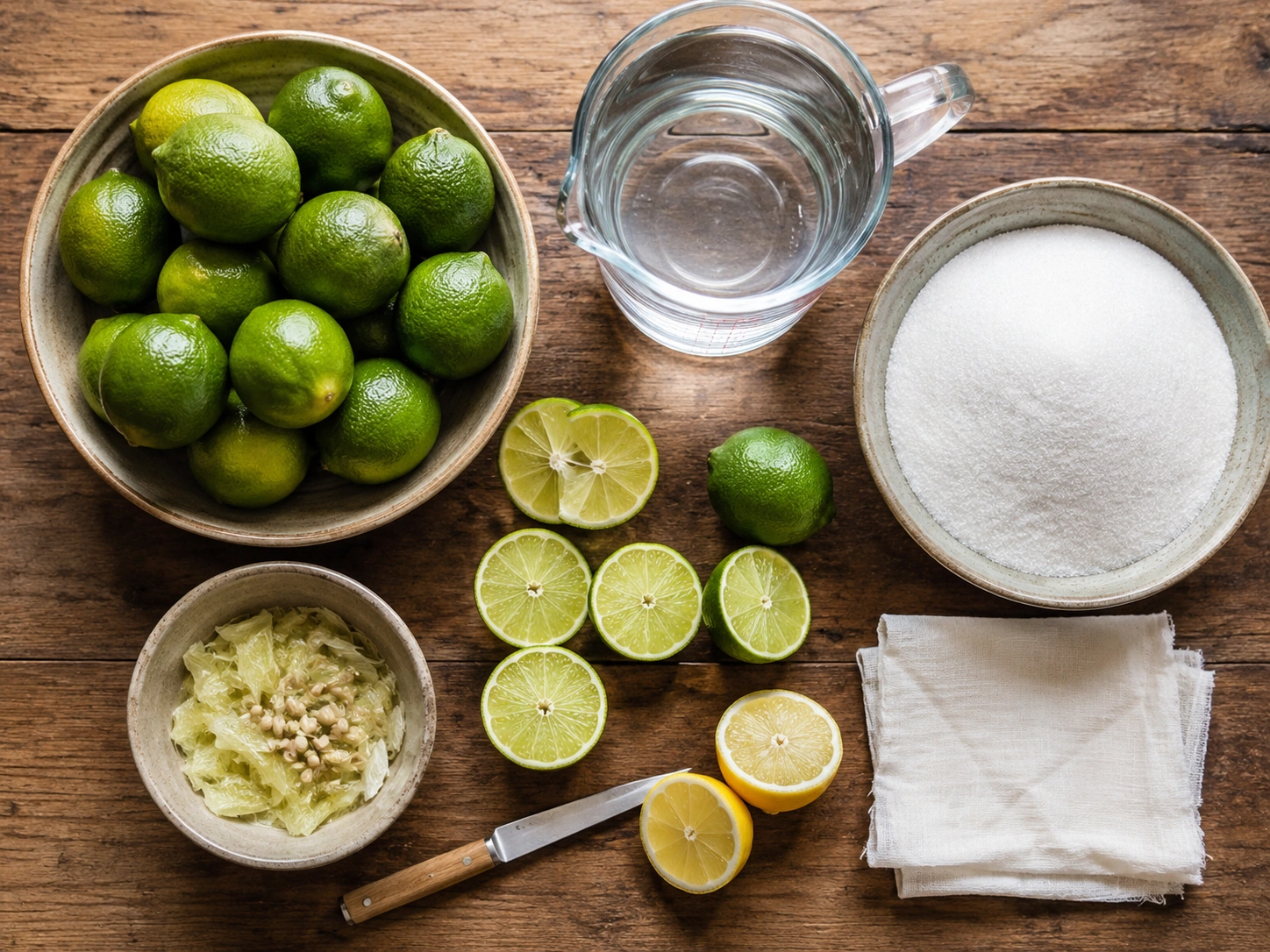
1 kg limes
— roughly 8–10 limes, depending on size.
-
1.5 litres water
— for softening the peel and dissolving natural pectin.
-
1.5 kg white sugar
— standard granulated white sugar creates a sparkling, clear set.
-
Juice of 1 lemon
— optional, but it helps balance sweetness and supports the set.
Step-by-Step Guide
Method
1
Prepare the limes
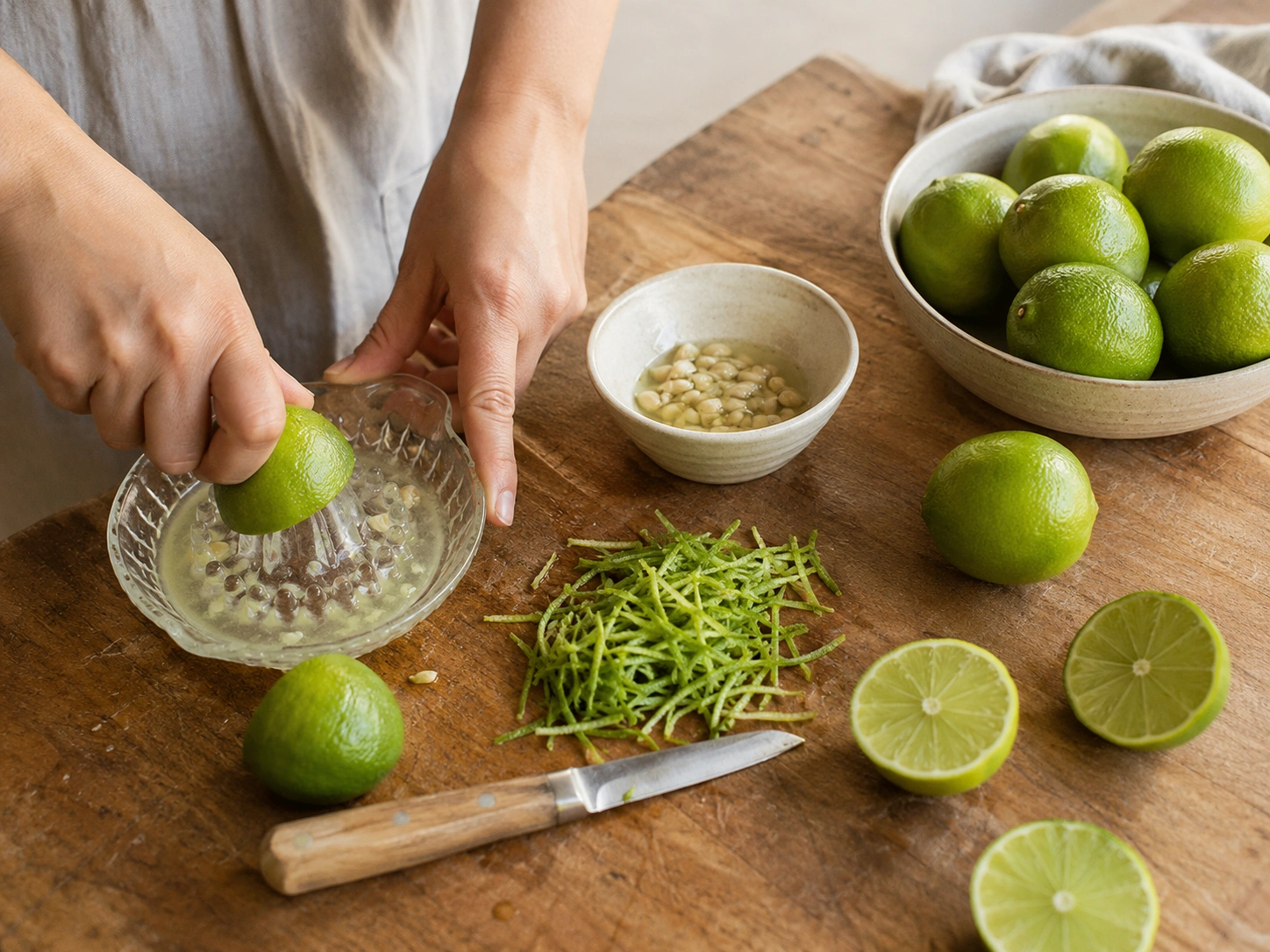
Wash the limes well. Cut them in half, then juice them, keeping the juice aside. Scoop out the pulp and pips and set them aside too — this is where most of the pectin lives, so don't throw it away. Thinly slice the peel (skin and pith together) into fine shreds.
2
Bundle the pips and pulp
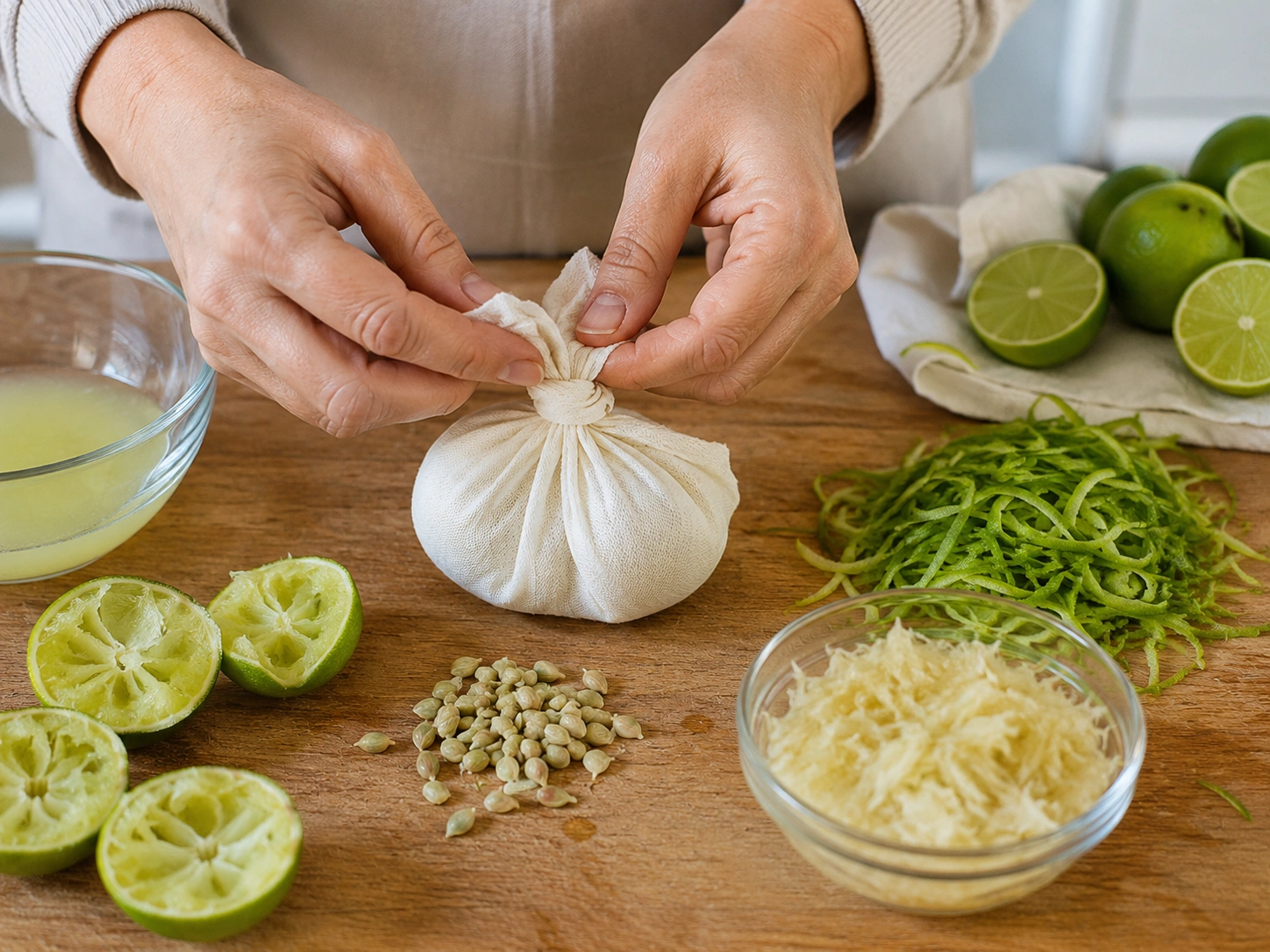
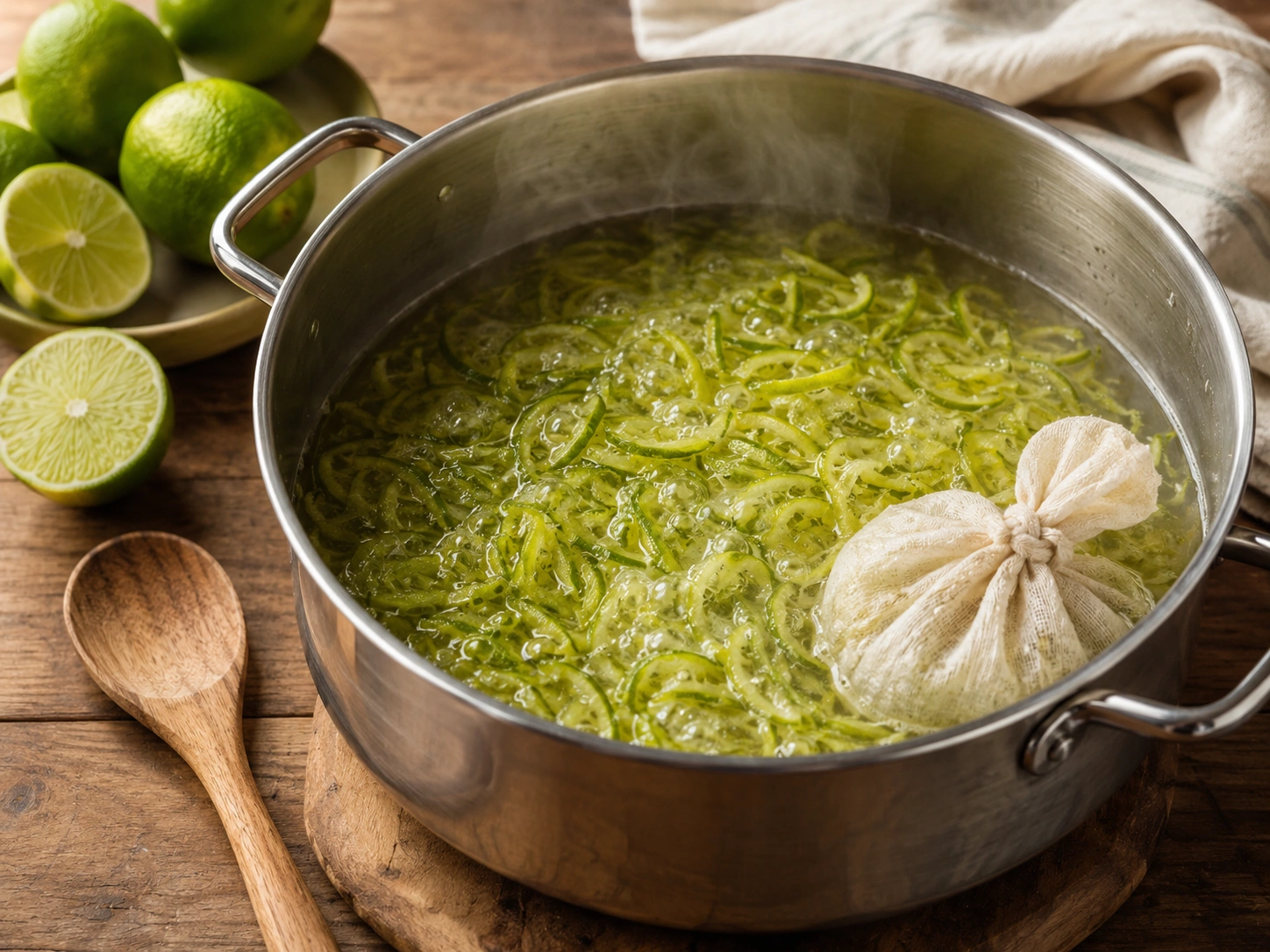
Tie the pips, pulp, and any membrane into a small square of muslin or cheesecloth. This little bag releases natural pectin into the liquid as it simmers, allowing the marmalade to set cleanly without commercial pectin.
3
Simmer the peel
Put the sliced peel, the muslin bag, lime juice, and water into your pot. Bring to a gentle simmer and cook uncovered for 1.5 to 2 hours, until the peel is completely soft and easily pressed between your fingers.
Why It Matters: Peel must soften fully now; sugar permanently hardens untreated citrus cell walls.
4
Remove the muslin bag
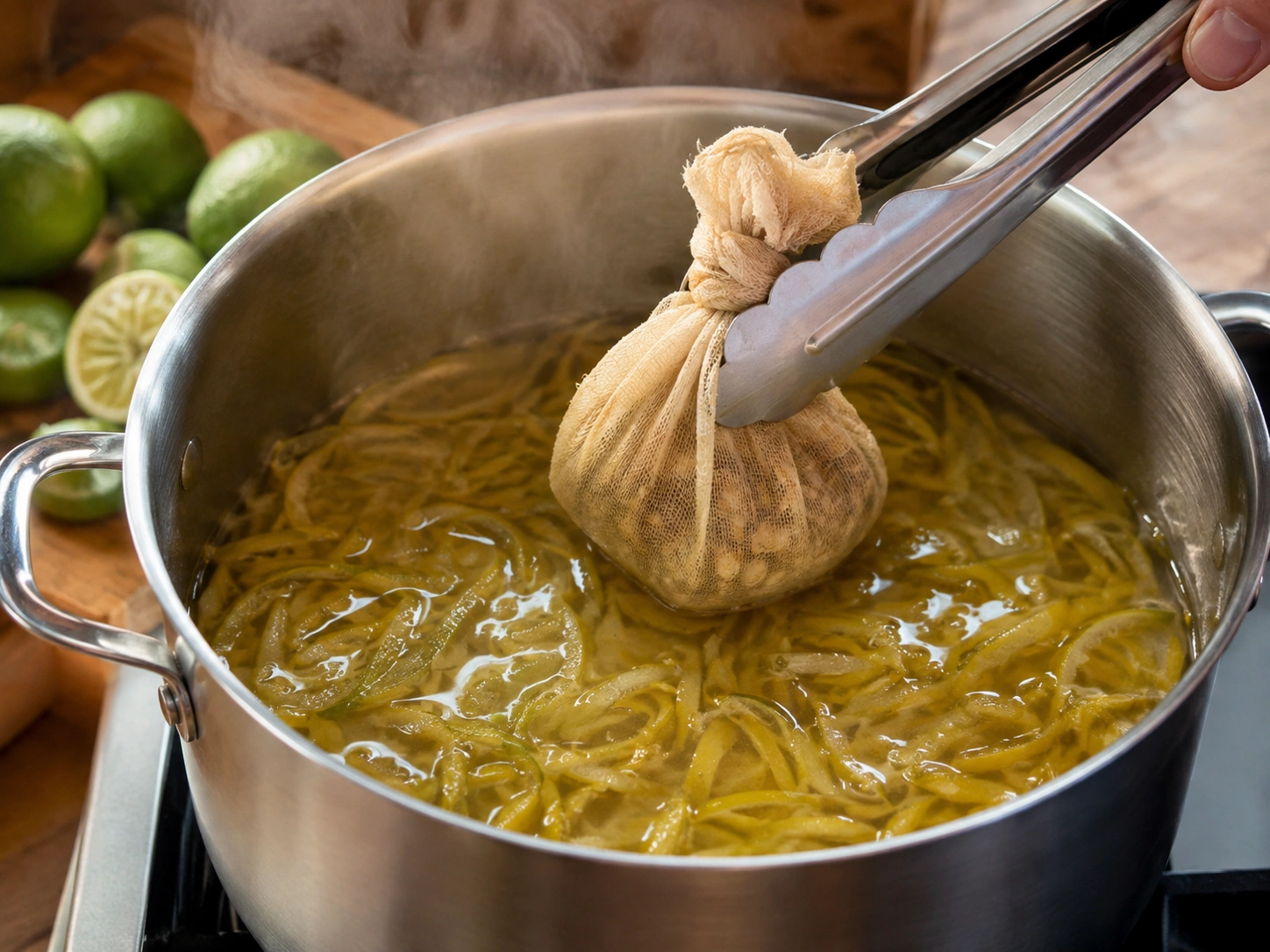
Once the peel is soft, take out the bag and squeeze it well with spoons to extract every drop of that pectin-rich liquid back into the pot. Discard the spent bag.
5
Add the sugar
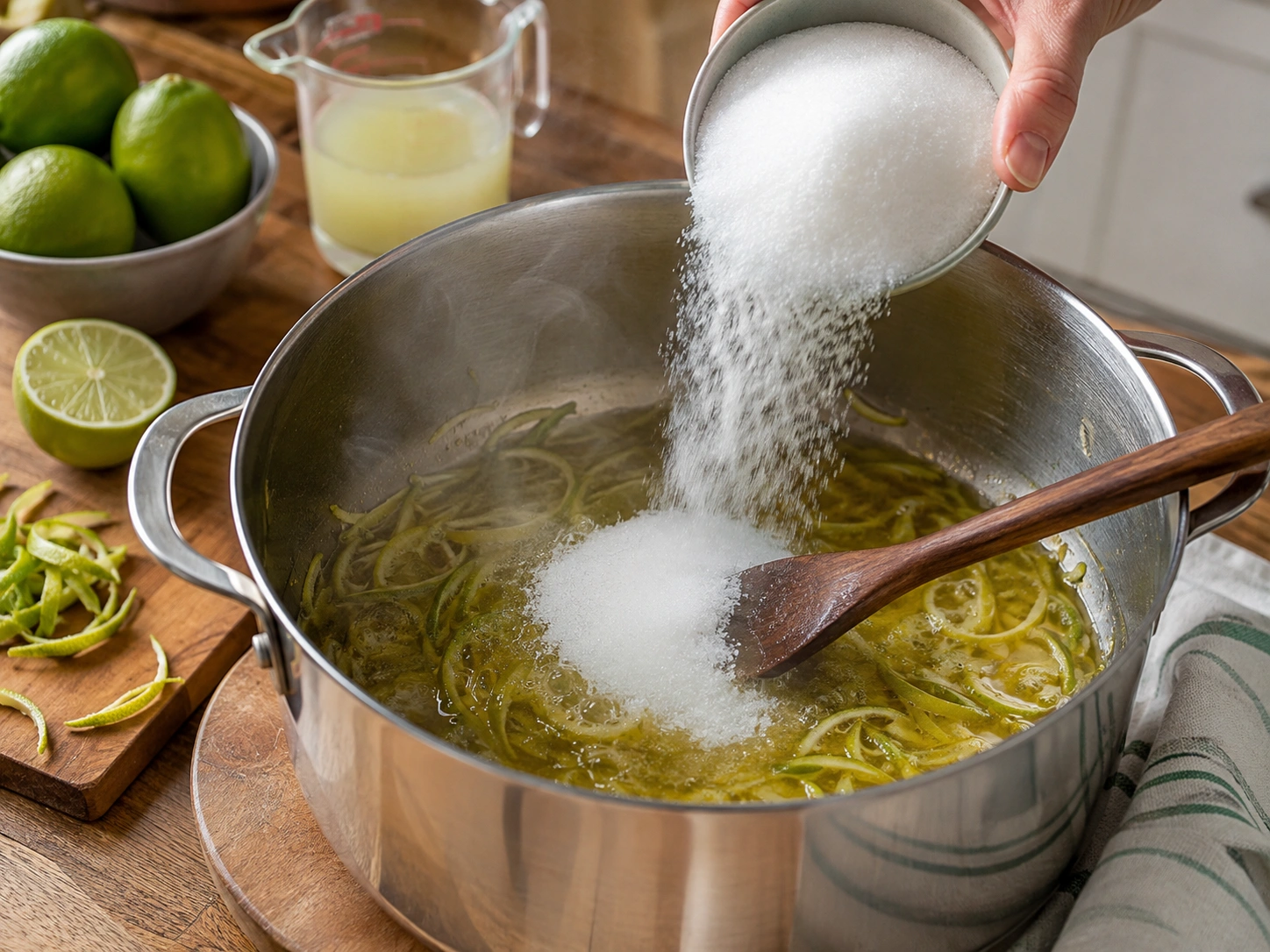
Stir in the sugar over low heat until fully dissolved before bringing the mixture back up to a boil. Undissolved sugar crystals can sink and scorch on the bottom of the pot.
6
Boil to setting point
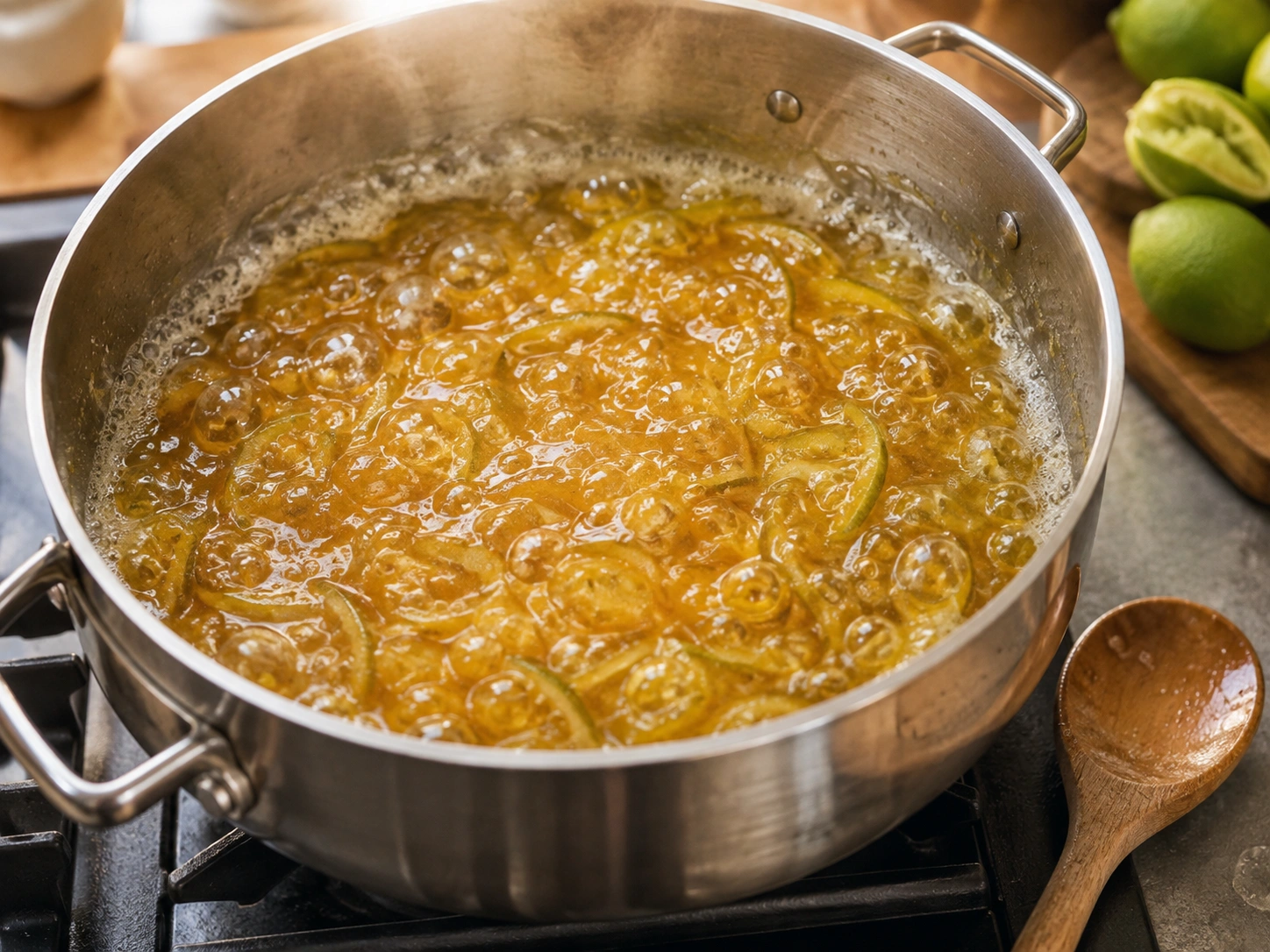
Bring to a rapid rolling boil and cook, stirring occasionally, for 15 to 20 minutes. Start testing for a set after about 10 minutes (target 105°C / 220°F on a thermometer).
7
Frozen saucer wrinkle test
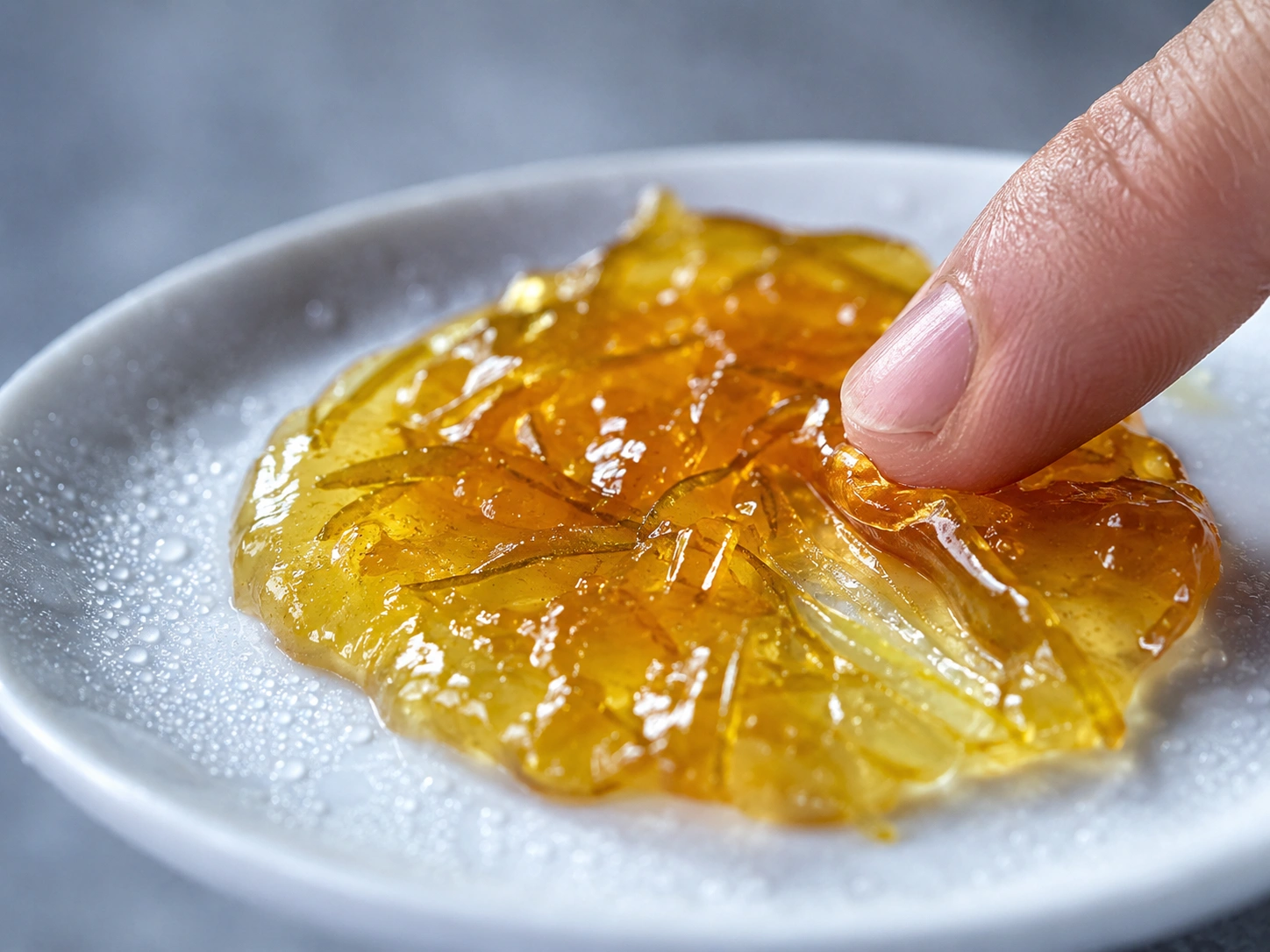
Place a small spoonful onto a frozen saucer, wait 30 seconds, then push gently with your fingertip. If it wrinkles and crinkles cleanly without running back, setting point is reached.
8
Rest, then jar
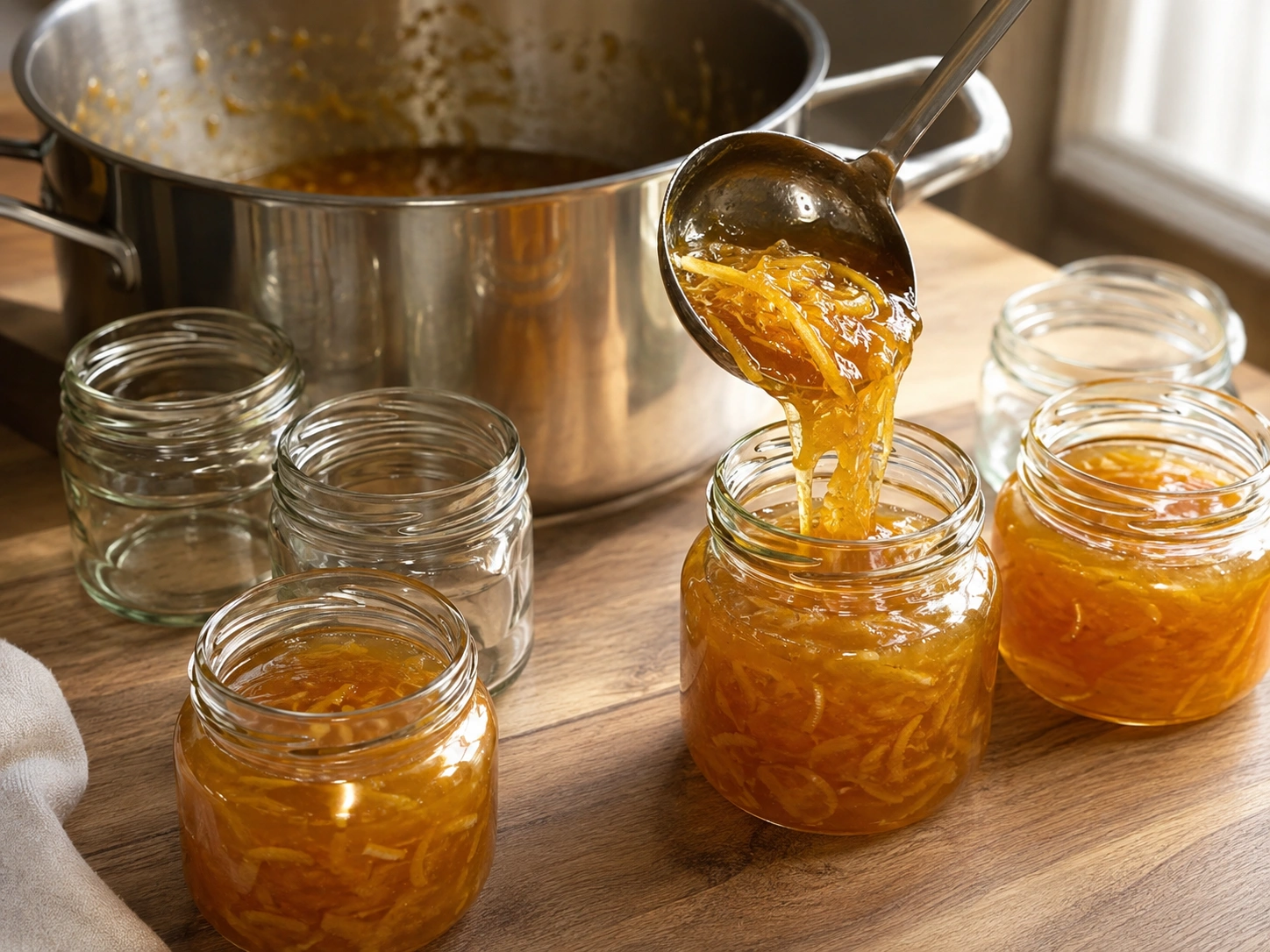
Take the pot off the heat and let sit for 10–15 minutes so the syrup thickens and holds the peel evenly suspended. Pour into warm sterilised jars, seal immediately, and cool completely.
Final Serving
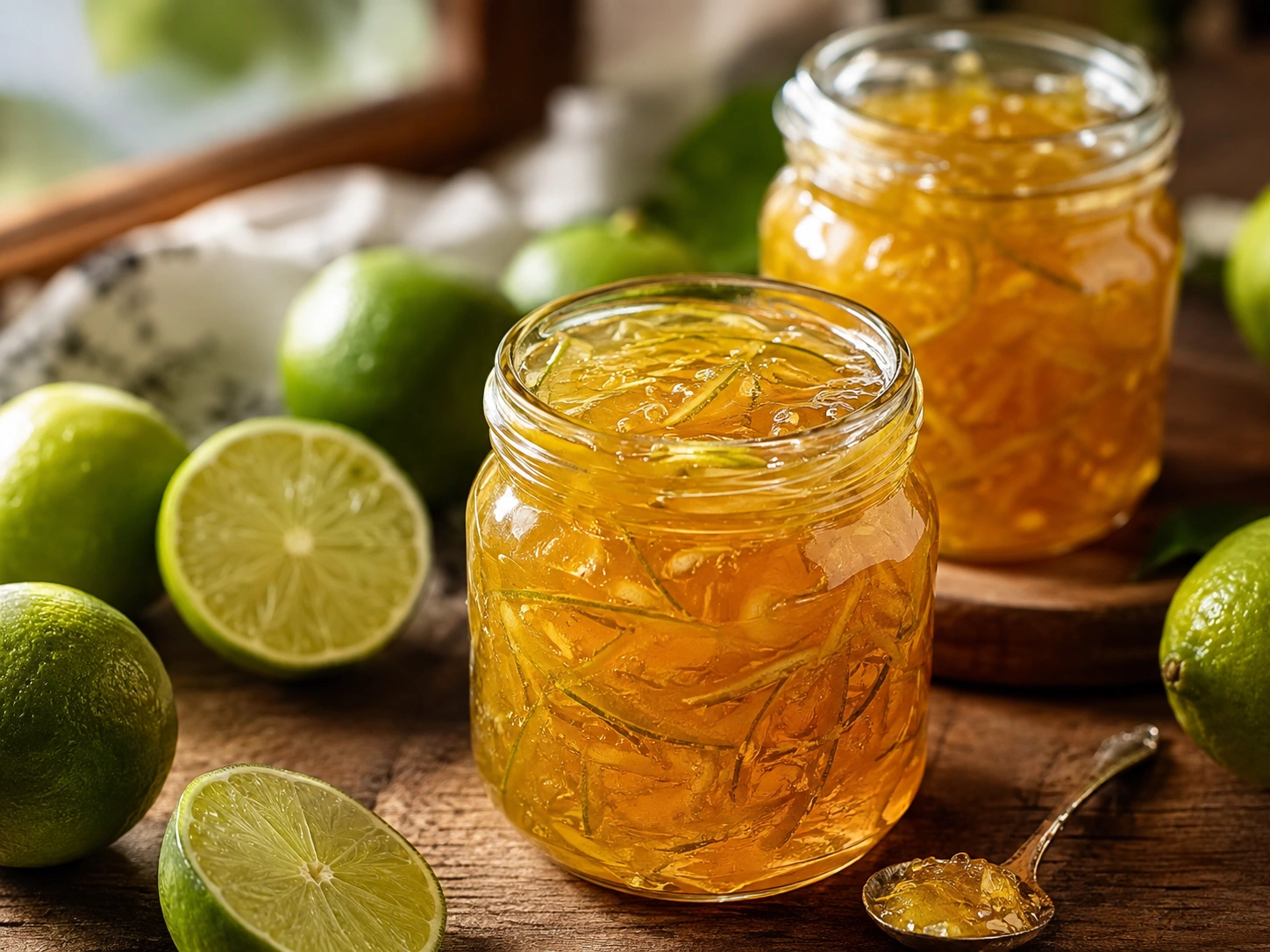
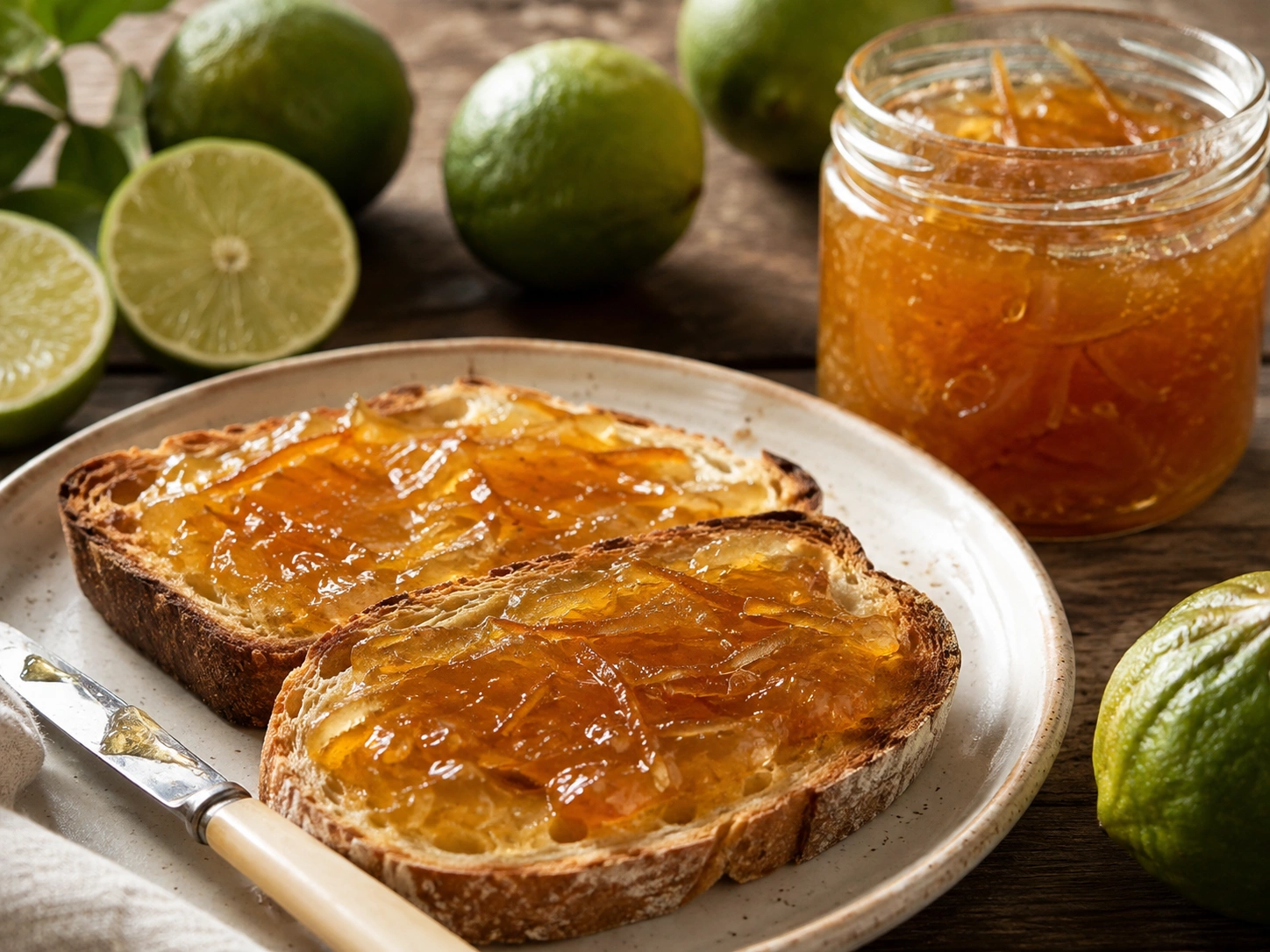
Once completely cooled and set, your homemade lime marmalade is ready to enjoy. It features a glowing amber-green hue, a glossy set with suspended peel ribbons, and a delightfully punchy citrus bite.
Common Problems and How to Fix Them
| Problem |
Underlying Cause |
Solution & Fix |
| The marmalade won't set |
Not enough pectin or acid, or not boiled hard enough at the sugar stage. |
Rescue method: Empty jars back into pot, add juice of 1 lemon, boil hard for 5–7 mins, and retest on a frozen saucer. |
| It's overly bitter |
Pith not cooked long enough before sugar was added (sugar locks in bitterness). |
Slice peel razor-thin next time and extend the initial simmer by another 20 to 30 mins in water before adding sugar. |
| It's too thick or too dark |
Boiled for too long past setting point (sugar caramelisation or scorching). |
Stop boiling immediately once saucer wrinkles. Over-set batches can be loosened by reheating with 2–3 tbsp of hot water. |
| Peel floats to the top |
Jarred immediately after boiling while the syrup was still thin and fluid. |
Always rest off the heat for 10–15 minutes before jarring so the syrup thickens and holds peel evenly suspended. |
Storage and Shelf Life
Properly sterilised and sealed jars of lime marmalade will keep in a cool, dark cupboard for up to a year unopened.
Once opened, store in the fridge and use within a month. If a lid hasn't sealed properly (you'll notice the lid doesn't stay concave when pressed, or pops back), refrigerate that jar and use it within a couple of weeks rather than storing it long-term.
A Few Ways to Use It Beyond Toast
Lime marmalade is more versatile than it gets credit for. Try it:
🍗 Glazed Meats
Warmed slightly and brushed over roast chicken or pork in the last 10 minutes of cooking.
🥣 Yoghurt Parfaits
Stirred through natural yoghurt with a bit of vanilla.
🥗 Citrus Vinaigrettes
Whisked into a vinaigrette with olive oil and a touch of mustard.
🍸 Craft Cocktails
Spooned into a gin and tonic or old fashioned for a citrus-forward twist.
🍰 Cheesecake Swirl
Swirled through cheesecake batter before baking.
Final Thoughts
Lime marmalade rewards patience more than skill. The two things that matter most are giving the peel enough time to soften before the sugar goes in, and trusting the frozen saucer test over the clock. Once you've made one batch and seen how your particular pot, stove, and limes behave, every batch after that gets easier and more consistent.
If you give this a go, the texture and tartness are easy to adjust to taste — a little more lemon juice for a firmer set, a touch less sugar if you prefer a more savoury, less sweet spread. Marmalade making is one of those kitchen projects that's genuinely hard to get wrong once you understand what's happening in the pot.
Frequently Asked Questions
Do I need a sugar thermometer to make marmalade?
+
No, it helps but isn't essential. The frozen saucer test described above works just as reliably. If you do use one, you're aiming for 105°C (220°F), which is the setting point for most citrus marmalades.
Can I use bottled lime juice instead of fresh limes?
+
Not really, since most of the flavour, pectin, and structure in this recipe comes from the whole fruit, especially the peel, pith, and pips. Bottled juice alone won't give you the shreds of peel or the natural set that makes marmalade what it is.
Why is my marmalade too bitter?
+
This usually means the peel and pith weren't simmered long enough in the first stage, before the sugar went in. Sugar locks in bitterness rather than cooking it out, so if your batch turns out sharp, try extending that initial simmer by 20 to 30 minutes next time.
Why won't my marmalade set, even after boiling it for ages?
+
Boiling longer isn't always the fix. It's more often about pectin and acid levels than time. If the peel wasn't cooked soft enough before the sugar stage, or there wasn't enough acid, it may never firm up no matter how long you boil it. See the troubleshooting section above for how to rescue a runny batch.
Can I reduce the sugar in this recipe?
+
You can reduce it slightly, but sugar plays a bigger role than sweetness here. It helps the marmalade set and acts as a preservative. Cutting it back significantly will affect both texture and shelf life, so it's best to adjust in small increments rather than halving it outright.
Why does my marmalade look cloudy instead of clear and glossy?
+
This is often caused by boiling too vigorously once the sugar is in, which can create tiny air bubbles that cloud the finished product, or by not skimming any foam off the surface before jarring. A gentler boil and a quick skim before pouring usually fixes it.
How long does homemade lime marmalade last?
+
Sealed and properly sterilised jars will keep for up to a year in a cool, dark cupboard. Once opened, keep it in the fridge and use it within about a month.
Can I make this in a slow cooker instead of on the stovetop?
+
The initial softening stage can be done in a slow cooker, but the final setting stage really needs a proper rolling boil on the stovetop, since slow cookers don't get hot enough to reduce the mixture to setting point.
.svg)